Mountains
Best Mountains in Chile 2026: Ultimate Guide to Epic Peaks
Chile delivers some of the most diverse mountain landscapes on Earth, stretching over 2,600 miles from the Atacama Desert's volcanic peaks to Patagonia's granite towers. You'll find everything from the world's highest volcanoes near the Bolivian border to technical climbing routes that challenge even elite mountaineers...

-
01 / Verified & updated
May 2026
-
02 / Region
Mountains
-
03 / Read time
15 min
Chile delivers some of the most diverse mountain landscapes on Earth, stretching over 2,600 miles from the Atacama Desert's volcanic peaks to Patagonia's granite towers. You'll find everything from the world's highest volcanoes near the Bolivian border to technical climbing routes that challenge even elite mountaineers, all within a country that's narrower than most US states. The Andes backbone creates distinct climbing zones with wildly different conditions, from bone-dry desert ascents above 20,000 feet to temperate glacier routes where weather changes by the hour.
What makes Chile special is the geographic extremes packed into one country. The northern volcanoes offer high-altitude challenges without technical difficulty, perfect for acclimatization training. Central Chile provides access to Aconcagua's base camps and training peaks around Santiago. Southern Patagonia serves up some of the world's most challenging granite walls, where even experienced climbers get humbled by weather that can shift from calm to hurricane-force winds in minutes.
The logistics vary dramatically by region. Northern peaks require 4WD access and careful water planning, while Patagonian routes demand technical gear and flexible schedules to wait out storms. Most peaks don't require permits, but the popular ones like Torres del Paine have booking systems that fill months ahead. You can climb year-round somewhere in Chile, but timing matters more here than almost anywhere else.
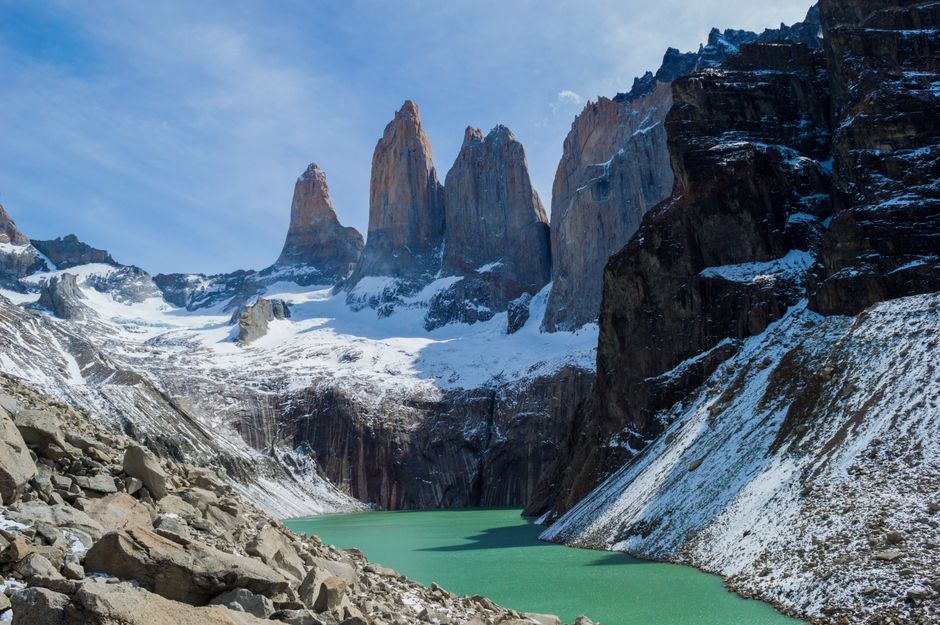
Chile's Diverse Mountain Landscapes: From Desert Volcanoes to Patagonian Towers
Chile's mountain geography reads like a geology textbook come to life. The Nazca Plate slides under the South American Plate along Chile's entire coastline, creating the volcanic chain that defines the country's backbone. This tectonic activity produces three distinct mountain zones, each with its own climbing culture and challenges.
The northern Altiplano shares geology with Bolivia and Peru, where massive stratovolcanoes rise from high desert plateaus above 12,000 feet. Here you'll climb Ojos del Salado at 22,615 feet, the world's highest active volcano, and Llullaillaco at 22,110 feet, where Inca mummies were discovered perfectly preserved by the altitude and dry conditions. These peaks offer non-technical but serious high-altitude climbing, with approaches that require careful acclimatization and expedition-level logistics.
Central Chile's Andes create the classic Andean profile most people picture when they think about South American mountains. The range widens here, creating space for massive peaks like Aconcagua just across the Argentine border. Chilean peaks in this zone include Ojos del Salado's southern approaches and training mountains around Santiago that you can day-hike from the city. The Mediterranean climate means predictable dry summers and wet winters.
Patagonian Chile shifts the game completely. The Andes narrow and steepen, creating the granite spires and ice caps that made this region famous among serious mountaineers. Weather systems roll off the Pacific Ocean with little warming, creating conditions that can dump snow in summer and generate winds that regularly exceed 100 mph. The Torres del Paine massif represents the accessible face of Patagonian climbing, while peaks like Cerro Torre offer some of the most challenging conditions on the planet.
Atacama Desert Volcanic Peaks: Ojos del Salado and Llullaillaco
The Atacama Desert holds the planet's highest volcanic peaks, where you can climb above 22,000 feet without technical mountaineering skills. Ojos del Salado at 22,615 feet ranks as the world's highest active volcano and Chile's highest peak, though it hasn't erupted in recorded history. The name means "Eyes of Salt" for the salt deposits and small crater lakes near the summit that occasionally hold water depending on seasonal snowmelt.
The standard route up Ojos del Salado starts from Laguna Verde at 14,100 feet, where most climbers spend 2-3 days acclimatizing before attempting the summit. You'll need a 4WD vehicle to reach this base camp, or you can hire local guides from Copiapó who provide transportation and know the current road conditions. The climb itself involves steep scree slopes and some Class 2 scrambling near the summit, but no technical rock or ice climbing.
Llullaillaco offers a remote but equally spectacular high-altitude experience at 22,110 feet. This peak gained archaeological fame in 1999 when researchers discovered three perfectly preserved Inca child mummies near the summit, sacrificed over 500 years ago. The extreme altitude and dry conditions created natural mummification that preserved clothing, hair, and even stomach contents.
Both peaks require serious high-altitude preparation. Most climbers spend 10-14 days total, including acclimatization climbs on nearby 19,000-foot peaks like Cerro Bayo or Volcán Copiapó. The thin air above 20,000 feet slows even fit climbers to a crawl, and afternoon thunderstorms can create lightning danger on the exposed upper slopes.
Pro Tip: Bring more water than you think you need. The desert air is so dry that you'll dehydrate faster than at sea-level altitudes, and there are no reliable water sources above base camp on either peak.
Central Andes Mountains: Aconcagua Base and Santiago's Backdrop Peaks
Central Chile provides the most accessible mountain climbing in the country, with peaks you can see from Santiago's streets and training routes that let you day-hike from the city. While Aconcagua itself sits on the Argentine side of the border, the Chilean approach through Portillo offers striking views of the Western Hemisphere's highest peak and access to excellent acclimatization climbs.
The Portillo area serves as a natural base camp for Aconcagua attempts, where you can acclimatize on peaks like Cerro Tolosa (17,160 feet) and Cerro Almacenes (17,020 feet) while enjoying the luxury of staying in actual hotels rather than tents. The ski resort town of Portillo provides equipment rental, guides, and transportation to trailheads, making it the most comfortable way to prepare for big Andean peaks.
Around Santiago, several peaks offer excellent training and views of the city sprawl below. Cerro El Plomo (17,815 feet) provides a serious high-altitude challenge that most fit hikers can complete in 2-3 days from the city. The trail starts from La Parva ski area and follows an ancient Inca route to the summit, where archaeologists have found the mummy of a young Inca boy sacrificed to mountain gods.
Cerro San Ramón (10,095 feet) offers the classic Santiago backdrop peak that you see from the city center. The trail starts from the Las Condes neighborhood and climbs steeply through scrub vegetation to rocky slopes with expansive city views. You can complete this as a long day hike, but most people camp at Piedra Numerada to break up the 12-hour round trip.
The central Andes benefit from Mediterranean climate patterns that create predictable seasons. Summer (December-March) offers the best weather windows, with stable high pressure and minimal precipitation. Winter brings snow to elevations above 8,000 feet, but you can still climb lower peaks around Santiago throughout the year.
Torres del Paine: Patagonia's Iconic Granite Towers
Torres del Paine National Park contains Chile's most photographed mountains and some of South America's best multi-day trekking. The Torres del Paine themselves rise as three granite spires reaching over 8,000 feet, created by magma intrusion that cooled slowly underground before erosion exposed the harder granite core. These towers have become symbols of Patagonian wilderness and challenge even expert rock climbers with their vertical granite walls.
The W Trek provides the most popular way to experience the Torres, covering 50 miles over 4-5 days through valleys that showcase different faces of the massif. You'll hike to the base of the Torres themselves, visit Grey Glacier, and traverse valleys filled with turquoise lakes and lenga forests. The trek requires advance booking through the national park system, and popular dates fill up 6 months ahead for peak season.
For serious mountaineers, the Torres themselves offer world-class granite climbing on routes that range from Grade IV to Grade VII in difficulty. The East Face of Torre Central features the most famous route, first climbed by Italian alpinists in 1958. These routes require advanced technical skills, weather windows that rarely last more than 2-3 days, and gear for everything from rock climbing to snow and ice conditions.
Cuernos del Paine create the other iconic silhouette in the park, with dark sedimentary caps sitting on granite bases that glow orange in sunrise and sunset light. These peaks offer less technical climbing than the Torres but still require mountaineering skills and careful route-finding through complex terrain.
The park's weather creates the biggest challenge for any climbing attempt. Patagonian storm systems generate winds that regularly exceed 70 mph, and weather can change from calm to violent within hours. Even experienced climbers often wait days for weather windows, and many attempts fail due to conditions rather than technical difficulty. You'll see similarities to the Chilean canyons in terms of dramatic landscape changes and weather variability.
Patagonia's Remote Mountain Peaks: Cerro Torre and Fitz Roy Circuit
Beyond Torres del Paine, Chilean Patagonia holds some of the world's most challenging granite peaks in remote valleys that require expedition-level commitment. Cerro Torre (10,262 feet) stands as perhaps the most difficult mountain of its height anywhere on Earth, where the combination of technical climbing, unpredictable weather, and rime ice formations has created a legendary reputation among elite alpinists.
The Cerro Torre massif straddles the Chile-Argentina border, with the classic climbing routes accessed from the Argentine town of El Chaltén. However, the Chilean approaches offer more remote access through the Southern Patagonian Ice Field. These routes require ice climbing skills, glacier travel experience, and the ability to navigate in whiteout conditions across trackless ice fields.
Fitz Roy (11,171 feet) provides equally challenging granite climbing with slightly more predictable access. The peak's needle-like profile has made it a symbol of Patagonian mountaineering, featured on Patagonia company logos and countless climbing films. The standard route involves Grade VI rock climbing at altitude, with weather windows so brief that most attempts involve bivouacking on the wall.
The Paine Grande Circuit offers a less technical but equally striking way to experience this region's granite architecture. This 8-10 day trek circumnavigates the entire Torres del Paine massif, including sections through Patagonian forests and across high passes with views into Argentina's wild interior.
Cerro Paine Grande itself (8,976 feet) provides the highest peak in Torres del Paine National Park and a challenging but non-technical objective for strong hikers. The route requires glacier travel skills and crevasse rescue knowledge, but doesn't involve technical rock climbing. Weather remains the primary challenge, with success rates under 30% due to Patagonian storm systems.
Warning: Patagonian weather can turn deadly in hours. Always carry emergency shelter, extra food, and communication devices. Even day hikes can become multi-day epics when storms move in.
Mountain Climbing in Chile: Permits, Guides, and Technical Requirements
Chile's permit requirements vary dramatically by region and peak, from no permits needed for most Atacama volcanoes to advance reservations required for Torres del Paine. Understanding the bureaucracy and safety requirements can make the difference between a successful expedition and a frustrated trip home.
Northern volcanoes like Ojos del Salado and Llullaillaco generally don't require climbing permits, but you do need permission to cross military zones near the Bolivian and Argentine borders. Contact DIFROL (Chile's border agency) at least 30 days before your trip with passport details and intended routes. Some areas require guided access due to unexploded ordnance from border conflicts, particularly near Paso de San Francisco.
Torres del Paine operates on a reservation system that limits daily entries to protect the fragile ecosystem. You must book camping spots and refugio beds through the official CONAF website or authorized tour operators. Peak season reservations (December-February) typically sell out 4-6 months in advance. Day hiking doesn't require reservations, but overnight trips mandate advance booking.
Technical requirements depend on your climbing objectives. Atacama volcanoes require high-altitude experience but no technical climbing skills. Most routes involve Class 2 scrambling at worst, but the altitude above 20,000 feet creates serious physiological challenges that kill unprepared climbers every year.
- Patagonian peaks demand advanced technical skills including rock climbing to Grade V+, ice climbing, glacier travel, and self-rescue abilities. Weather conditions can require everything from rock shoes to crampons in the same day.
- Central Andes peaks around Santiago offer middle-ground objectives requiring basic mountaineering skills but not extreme technical ability. Most involve hiking and scrambling with occasional snow and ice sections.
- Guide requirements vary by region and your experience level. Atacama volcanoes can be climbed independently by experienced high-altitude climbers, but local guides provide valuable route knowledge and logistics support.
Rescue services in Chile are limited and expensive. CONAF operates rescue teams in national parks, but response times can exceed 24 hours in remote areas. Private helicopter evacuation from Patagonia can cost $50,000+ USD, making comprehensive travel insurance with mountaineering coverage essential for any serious climbing attempt.
For international climbers, Chile's mountain rescue philosophy emphasizes self-sufficiency rather than rapid response. You're expected to carry emergency shelter, communication devices, and enough supplies to survive until help arrives. This is similar to climbing approaches in mountains in Colombia, where remote locations demand expedition-level preparation.
Best Time to Climb Chilean Mountains: Seasonal Weather Patterns by Region
Chile's extreme north-south geography creates three distinct climbing seasons that don't align with traditional Northern Hemisphere patterns. Understanding regional weather windows can mean the difference between perfect conditions and dangerous storms, especially in Patagonia where weather kills more climbers than technical difficulty.
Atacama Desert peaks (December-March) offer the most stable weather during austral summer, when high pressure systems dominate and precipitation rarely occurs. Temperatures range from -10°F to 70°F depending on elevation, with dramatic daily swings that can freeze water bottles at night and create scorching conditions by afternoon. Afternoon thunderstorms pose lightning risks above treeline, typically building between 1-4 PM.
Winter climbing (June-September) in the Atacama becomes possible for experienced high-altitude climbers, but requires cold weather gear and shorter daylight hours. Snow conditions can actually improve route-finding on some peaks by covering loose scree, but extreme cold makes technical climbing dangerous above 18,000 feet.
Central Chile (November-April) experiences Mediterranean climate patterns with dry summers and wet winters. Peak climbing season runs December through March, when Santiago area peaks offer consistent weather and minimal snow below 12,000 feet. Shoulder seasons (November, April) can provide excellent conditions with fewer crowds, but require flexibility for weather delays.
Patagonian climbing follows inverted seasons that confuse many Northern Hemisphere climbers. Summer (December-February) provides the longest days and warmest temperatures, but also the windiest conditions and most unpredictable weather. Many experienced Patagonian climbers prefer shoulder seasons (October-November, March-April) when storm systems are less violent but weather windows still exist.
Note: Patagonian weather forecasts beyond 48 hours are essentially useless. Plan for flexibility and always carry extra food and fuel for extended weather delays.
Weather window strategies vary by region. Atacama peaks allow precise planning with reliable forecasts, while Patagonian objectives require opportunistic approaches where you position yourself for brief good weather periods. Central Andes peaks fall between these extremes, with generally predictable conditions but occasional surprise storms.
Seasonal crowd patterns affect permit availability and route conditions. Torres del Paine sees peak crowds from December-February, when reservations are most difficult and trails most crowded. Atacama volcanoes attract fewer total climbers but see concentrated activity during optimal weather windows in January-February.
The contrast in seasonal planning requirements makes Chilean mountain climbing unique compared to New Zealand's epic peaks, where weather patterns are more consistent across regions. Here you need different strategies for each zone, from desert expedition planning in the north to storm-chasing tactics in Patagonia.
Smart Chilean climbers often plan multi-region trips that follow optimal conditions from north to south, starting with Atacama volcanoes in December, moving to central peaks in January, and finishing with Patagonian objectives in February-March. This approach maximizes weather windows while allowing for acclimatization progression from high altitude to technical terrain.
Frequently Asked Questions
What are the highest mountains in Chile? Ojos del Salado (22,615 feet) ranks as Chile's highest peak and the world's highest active volcano. Llullaillaco (22,110 feet) comes second, followed by Cerro Pissis (22,287 feet) on the Argentina border. All of Chile's highest peaks sit in the northern Atacama Desert region.
Do I need permits to climb mountains in Chile? Most Chilean peaks don't require climbing permits, but Torres del Paine National Park requires advance reservations for overnight stays. Northern volcanoes near borders may need DIFROL permission for military zone access. Always check current requirements with Chilean consulates before traveling.
What is the best time of year to visit Torres del Paine? December through March offers the warmest weather and longest days, but also the windiest conditions and highest crowds. October-November and March-April provide shoulder season opportunities with potentially better weather windows but shorter days and colder temperatures.
How difficult is it to climb Chilean volcanoes? Atacama volcanoes like Ojos del Salado require high-altitude experience but minimal technical climbing skills. Routes involve mostly hiking and Class 2 scrambling, but the extreme altitude above 20,000 feet creates serious physiological challenges that demand proper acclimatization and fitness.
Can beginners climb mountains in Chile safely? Santiago area peaks like Cerro San Ramón offer beginner-friendly objectives within day-trip distance of the city. However, serious Chilean peaks require mountaineering experience, proper gear, and emergency preparedness. Consider guided climbs or training courses before attempting independent ascents.
Chile's mountain diversity offers something for every climbing ambition, from accessible training peaks near Santiago to world-class granite walls in Patagonia. The key to success lies in matching your skills and experience to appropriate objectives while respecting the serious logistical and weather challenges that make Chilean peaks both rewarding and potentially dangerous. Training for bigger objectives or seeking peak experiences in themselves, Chile's mountains deliver some of the most spectacular and challenging climbing opportunities on the planet. The dramatic landscapes rival those found in Patagonian landscapes in Argentina, creating a unified climbing destination that spans both countries and offers endless opportunities for mountain adventure.
Common questions
- 01 What is the highest mountain in Chile?
- Ojos del Salado, at 22,615 feet, is Chile's highest peak and the world's highest active volcano, though it has not erupted in recorded history.
- 02 Why is Llullaillaco famous?
- In 1999 researchers discovered three perfectly preserved Inca child mummies near its summit, sacrificed over 500 years ago and preserved by the extreme altitude and dry conditions.
- 03 Do you need a permit to climb mountains in Chile?
- Most peaks do not require permits, but popular destinations like Torres del Paine have booking systems that can fill up months in advance.
- 04 What is the W Trek in Torres del Paine?
- The W Trek is the most popular way to experience the Torres del Paine massif, covering 50 miles over 4-5 days and taking hikers to the base of the Torres and to Grey Glacier.
Heads up: some links in this article are partner links, so we may earn a small commission at no extra cost to you. Learn more.