
Travel Tips
Top Attractions and Activities to Do in Malaysia in 2026
Malaysia splits into two land masses, and most first-timers only budget for one. Here's how to fit Petronas Towers, Batu Caves, George Town, and Borneo's orangutans into a single realistic itinerary.

-
01 / Verified & updated
August 2026
-
02 / Region
Travel Tips
-
03 / Read time
12 min
Malaysia gets overlooked by travelers bouncing between Thailand and Bali, and that's honestly good news for you. You get Petronas Towers-level skyline drama, cave temples carved into limestone cliffs, colonial old towns with better food than anywhere else in Southeast Asia, and orangutans in the wild, all without the Bali-level crowds. The catch is that Malaysia is split across two land masses separated by the South China Sea, so you can't wing an itinerary the way you might in a smaller country.
This guide walks through the top spots region by region, with real costs, real distances, and honest advice on what's worth your limited vacation days in 2026.

Malaysia at a Glance: Regions, Landscapes, and When to Go in 2026
Malaysia comes in two very different halves. Peninsular Malaysia hangs off the bottom of Thailand and holds Kuala Lumpur, Penang, Malacca, and Langkawi, all connected by decent highways and a fast train network. East Malaysia sits on the island of Borneo, split into the states of Sabah and Sarawak, and it's a separate flight (usually 2.5 hours from KL) rather than a drive.
The peninsula's west coast, where most of the big attractions sit, is driest from December through February and hottest but still workable from June through August. The east coast (think Perhentian and Redang islands) shuts down for monsoon season from November to February, so flip your calendar if that's your focus. Borneo runs its own weather pattern too, and Mount Kinabalu treks get booked out well ahead of the driest months, roughly March to September.
Humidity is a constant no matter when you go. Pack light fabrics, expect an afternoon downpour most days even in the dry season, and don't schedule anything too tight between outdoor stops. Locking in the right window matters just as much for a narrow seasonal target elsewhere, the same reasoning behind timing a spring walk through Best Places to See Plum Blossoms in Tokyo 2026: Bunkyo Walking Guide.
Kuala Lumpur: Petronas Towers, KL Tower, and Merdeka 118
KL is where most Malaysia trips start, and the skyline alone justifies a couple of days here. The Petronas Towers are the headline act: 88 stories, twin structures, and a skybridge connecting them at the 41st and 42nd floors. Tickets to the observation deck and skybridge run around RM 98 to RM 145 (roughly $21 to $31 USD) depending on which level you book, but always check the official Petronas Towers site before you go since prices and time-slot availability shift and tickets sell out days ahead in peak season.
Book your slot online at least 3 to 5 days ahead, especially if you want a sunset time. Walk-up tickets exist but often only for less desirable morning slots.
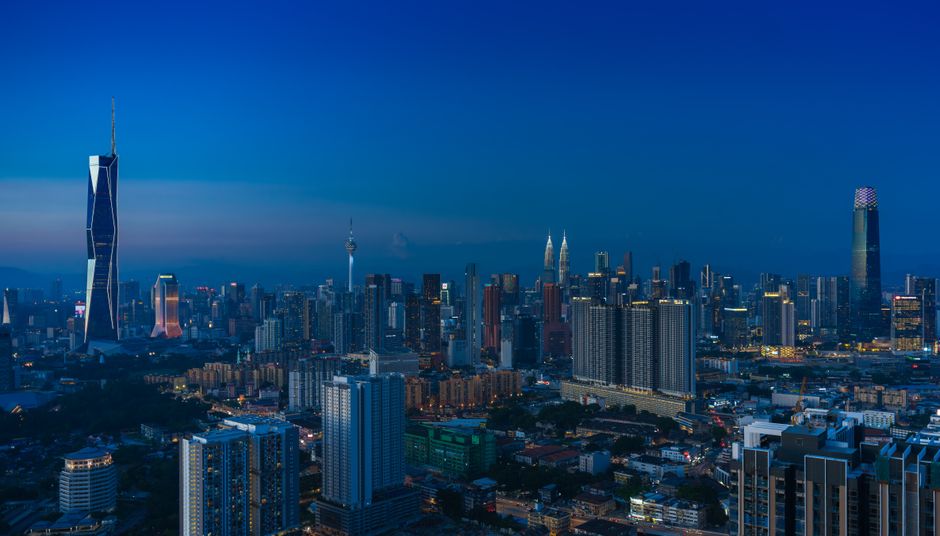
KL Tower (Menara Kuala Lumpur) is the cheaper, less-crowded alternative if you want the classic skyline view without booking weeks out. It sits on a hill above the city and includes a rotating Sky Deck. Since 2023, Merdeka 118 has held the title of world's second-tallest building, edging out the Petronas Towers in height. Its observation deck, The View at 118, gives you a straight-on angle of the twin towers themselves, which might be the better photo than standing at the towers.
- Petronas Towers: best for the interior skybridge experience and shopping at Suria KLCC right below.
- KL Tower: cheaper, easier bookings, good sunset spot.
- Merdeka 118: best for photographing the Petronas Towers from a distance.
Batu Caves and Sacred Landscapes Near Kuala Lumpur
Thirteen kilometers north of the city, Batu Caves is a limestone cave complex that's been a Hindu temple site for over a century. You'll spot it from the road: a 43-meter gold statue of Lord Murugan stands guard at the base, and behind it, 272 rainbow-painted steps climb up to the main cavern, a natural chamber with shrines tucked into the rock.
Entry to the main Temple Cave is free. Getting there is easy and cheap on the KTM Komuter train from KL Sentral, about 30 minutes each way. Go early, ideally before 9am, to beat both the heat and the tour buses. Wear something that covers your shoulders and knees, since it's an active place of worship, not just a tourist stop.

Beyond the main cave, the Dark Cave section requires a guided tour (roughly RM 35) and gets you into an undeveloped karst cave system with bats, cave-adapted spiders, and no crowds. If you like the idea of dramatic limestone terrain, this whole area gives you a small taste of what you'll see at a much bigger scale in Borneo later in the trip.
Pro Tip: Combine Batu Caves with a morning trip and be back in KL by lunchtime. There's no need to allocate a full day here.
Historic Towns: George Town, Malacca, and Putrajaya
Malaysia's colonial history left behind two UNESCO World Heritage towns that feel nothing like KL's glass towers.
George Town, Penang
George Town earned its UNESCO listing in 2008 for its mix of British colonial buildings, Chinese shophouses, and Peranakan mansions, all still standing shoulder to shoulder in the old core. It's also become an open-air street art gallery, with Ernest Zacharevic's mural of kids on a real bicycle drawing lines of tourists on Armenian Street. The real reason people fall for Penang is the food: char kway teow, assam laksa, and Penang-style rojak from hawker stalls that have been running for generations. A one-day food crawl through the Gurney Drive and New Lane hawker centers will run you maybe RM 40 to RM 60 total for a day of eating well.

Malacca (Melaka)
Malacca, about two hours south of KL by bus, got its UNESCO status the same year as Penang and shares the same layered colonial history, Portuguese, Dutch, then British. Jonker Street's night market runs Friday through Sunday evenings and is the best time to see the town alive. The red Dutch Square buildings and A Famosa fortress ruins are the classic photo stops, best visited in the cooler early morning. The layered fortress-and-square combo here plays a similar role to Europe's castle towns, worth weighing against a trip anchored around Cost to Visit Slovenia Castles: Bled, Ljubljana, Predjama 2026 if colonial-era architecture is what draws you to a destination.
Putrajaya
Putrajaya is the odd one out here, not historic at all but purpose-built as Malaysia's administrative capital starting in the 1990s. It's worth an afternoon for the pink-domed Putra Mosque sitting on an artificial lake and the modern boulevard architecture, a sharp contrast right after Malacca's old town streets.
Langkawi and the Andaman Islands: Beaches, Sky Bridge, and Jungle
If KL and the heritage towns cover culture, Langkawi is where Malaysia's landscapes turn tropical. This archipelago of 99 islands off the northwest coast is a duty-free zone, which means cheaper alcohol and chocolate than anywhere else in the country, plus a genuinely relaxed pace once you land.
The Langkawi Sky Bridge is the star attraction: 125-meter curved pedestrian bridge suspended 660 meters above sea level, reached by a steep cable car ride from Oriental Village. On a clear day you can see across to Thailand. Combined cable car and Sky Bridge tickets run around RM 85 for adults, and mornings tend to have clearer skies than afternoons before the haze rolls in.

Beyond the bridge, Langkawi gives you mangrove kayaking tours through the Kilim Karst Geoforest Park (look for eagles circling overhead), the rainforest trails inside Gunung Raya, and long stretches of quiet sand at Tanjung Rhu and Pantai Cenang. It's a much slower pace than Penang, which makes it the better call if your trip is starting to feel rushed.
Comparing it with Penang: if this is your first trip to Malaysia and you only have room for one, Penang wins for variety, food, culture, and walkability. Langkawi wins if beaches and jungle are the priority and you're fine with fewer things to actually do.
Borneo's Wild Landscapes: Orangutans, Rainforest, and Mount Kinabalu
Skipping Borneo is the most common regret among people who've done a Malaysia trip. It's a separate flight, usually into Kota Kinabalu (Sabah) or Kuching (Sarawak), but it's the part of the country that feels genuinely wild.
Sepilok Orangutan Rehabilitation Centre near Sandakan is the easiest place to see wild-born orangutans up close, with feeding platforms visible from a boardwalk twice daily. Entry runs around RM 30 for foreign adults. For a deeper wildlife experience, a river cruise on the Kinabatangan River gets you proboscis monkeys, pygmy elephants (seasonally), and hornbills along the banks during dawn and dusk boat trips.

Mount Kinabalu is Southeast Asia's tallest peak outside the Himalayan region, at 4,095 meters, and climbing it is a two-day guided trek with a mandatory overnight stop at Laban Rata before a pre-dawn summit push. Permits are capped daily, so book through a registered operator months ahead if you want a 2026 slot during peak season. If summiting isn't your thing, the base of Kinabalu Park still gives you cool mountain air and rainforest trails without the multi-day commitment.
Note: Orangutan sightings and mountain climbing permits are subject to conservation quotas and weather closures. Always confirm current rules with Sabah Tourism before booking.
Best Activities by Traveler Type: Adventure, Culture, and Relaxation
Malaysia's spread out enough that it helps to plan around what kind of trip you actually want, rather than trying to cram in everything.
- Adventure travelers: Mount Kinabalu trekking, Kilim Karst mangrove kayaking, and the Dark Cave spelunking tour at Batu Caves.
- Culture and food travelers: George Town's hawker circuit, Jonker Street night market in Malacca, and the Batu Caves temple grounds.
- Relaxation and beach travelers: Langkawi's Pantai Cenang and Tanjung Rhu, plus a slower few days around Kota Kinabalu's waterfront.
- Wildlife-focused travelers: Sepilok Orangutan centre and a Kinabatangan River cruise, both in Sabah.
Ten to twelve days is enough to hit KL, one heritage town, and either Langkawi or Borneo, but not comfortably both. Fourteen-plus days lets you do the full peninsula-plus-Borneo combo without feeling rushed.
Practical Tips: Costs, Transport, and Where to Stay in 2026
Malaysia is still one of the better value destinations in Southeast Asia. A midrange daily budget covering a decent hotel, meals, and local transport lands around RM 200 to RM 350 ($43 to $75 USD) per day as of 2026, with hawker meals costing as little as RM 8 to RM 15.
Getting between regions: the ETS train connects KL to Penang and Ipoh comfortably, buses cover Malacca easily, and Langkawi and Borneo both require short domestic flights on AirAsia or Malaysia Airlines, usually under $50 USD one-way if booked ahead. Inside KL, the LRT and MRT lines cover most tourist areas, and Grab (the regional Uber equivalent) is cheap and reliable everywhere.
For where to stay: base yourself near KLCC or Bukit Bintang in KL for walkability to the towers, the old core inside George Town's UNESCO zone in Penang, and Pantai Cenang in Langkawi if beach access matters more than anything else. If you're stacking this trip with other Southeast Asia stops, it's worth reading up on Top Things to Do in Morocco 2026: A Complete Travel Guide for comparison on how another mid-budget destination structures its costs, or check the surf scene breakdown in Best Surf Spots in Fiji 2026: Ultimate Guide to Epic Breaks if beaches and waves are pulling you toward a second island trip after Langkawi.
"Malaysia, truly Asia" isn't just tourism board copy. It's the only country in the region where you get skyscrapers, cave temples, colonial old towns, and rainforest with wild orangutans inside one 14-day loop.
Frequently Asked Questions
What are the top attractions in Malaysia?
The Petronas Towers and KL Tower in Kuala Lumpur, Batu Caves just outside the city, the UNESCO towns of George Town and Malacca, Langkawi's Sky Bridge and beaches, and Borneo's orangutan centres and Mount Kinabalu top most lists.
Is Langkawi or Penang better for a first visit to Malaysia?
Penang generally wins for a first trip thanks to its food, walkable old town, and street art. Langkawi is the better pick if beaches and a slower pace matter more to you than culture and city walking.
How many days do you need to see Malaysia's main attractions?
Budget at least 10 to 12 days to cover KL, one heritage town, and one of Langkawi or Borneo. Add a few more days if you want both island regions on the same trip.
What is the best time of year to visit Malaysia's landscapes?
December to February is driest on the peninsula's west coast (KL, Penang, Langkawi). Borneo's trekking season runs roughly March to September. The east coast islands close for monsoon from November to February.
How much does it cost to visit the Petronas Towers in 2026?
Observation deck and skybridge tickets run roughly RM 98 to RM 145 ($21 to $31 USD) as of 2026, but always confirm current pricing and time slots on the official Petronas Towers website before booking.
Is Borneo worth visiting alongside Peninsular Malaysia?
Yes, if your schedule allows it. It's a different flight and a different pace, but wild orangutans, river wildlife cruises, and Mount Kinabalu aren't available anywhere on the peninsula. If you're already comparing landscape-heavy add-on regions, it's a similar calculation to weighing hill towns against a coastal base, the kind of tradeoff covered in Best Hills in Italy 2026: Stunning Landscapes & Hilltop Towns or the town-hopping logic in Best Towns in Georgia 2026: Where to Stay & Day-Trip.
Malaysia rewards travelers who slow down enough to hit both halves of the country instead of just ticking off KL and calling it done. Start with the skyline and the caves, work your way through the heritage towns, and save at least a few days for either the islands or Borneo's rainforest before you fly home.
Common questions
- 01 What are the two main regions of Malaysia?
- Malaysia is split into Peninsular Malaysia, which includes Kuala Lumpur, Penang, Malacca, and Langkawi, and East Malaysia on the island of Borneo, made up of Sabah and Sarawak. These two regions are separated by the South China Sea and connected mainly by a flight of about 2.5 hours from KL.
- 02 When is the best time to visit Peninsular Malaysia?
- The west coast is driest from December through February and still workable, though hotter, from June through August. The east coast islands like Perhentian and Redang shut down for monsoon season from November to February.
- 03 How much do Petronas Towers tickets cost?
- Tickets to the observation deck and skybridge run about RM 98 to RM 145, roughly 21 to 31 US dollars, depending on the level booked. It is best to book online at least 3 to 5 days ahead, especially for a sunset slot.
- 04 How do you get to Batu Caves from Kuala Lumpur?
- Batu Caves is about 13 kilometers north of the city and is easy to reach by KTM Komuter train from KL Sentral, taking about 30 minutes each way. It is best to arrive early, ideally before 9am, to beat the heat and the tour buses.
Heads up: some links in this article are partner links, so we may earn a small commission at no extra cost to you. Learn more.

