
Castles
Best Castles in Germany: 2026 Guide to Fairytale Fortresses
Marksburg is the only Rhine castle never destroyed, which makes it the best pick for an intact medieval interior, torture chamber included, and it's an easy walk from the Braubach train stop.

-
01 / Verified & updated
August 2026
-
02 / Region
Castles
-
03 / Read time
10 min
Germany has more castles than any other country on earth, and most lists just throw 15 names at you with zero context on how to actually see them. That's a problem if you've got a week and want to string together more than one photo stop. This guide covers the icons, the ones nobody mentions outside Bavaria, and the actual logistics of getting between them by train, boat, or rental car. Real prices as of August 2026, real routes, no filler.
Why Germany Has More Castles Than Any Other Country
Germany didn't become one country until 1871. Before that, it was a patchwork of hundreds of independent kingdoms, duchies, prince-bishoprics, and free cities, each one needing its own fortress to defend borders and tax the local peasants. Estimates put the total number of castles, palaces, and fortified ruins across modern Germany at over 20,000, though nobody has an exact count because so many are half-collapsed stone foundations in the woods that only local historians know about.
That fragmentation is why you get such wide variety. The Rhine Valley got defensive fortresses built to tax river traffic. Bavaria got Romantic-era fantasy castles built by a king with more money than political power. Thuringia got medieval strongholds tied to the Reformation. You're not looking at one castle style, you're looking at 800 years of German political history frozen in stone.
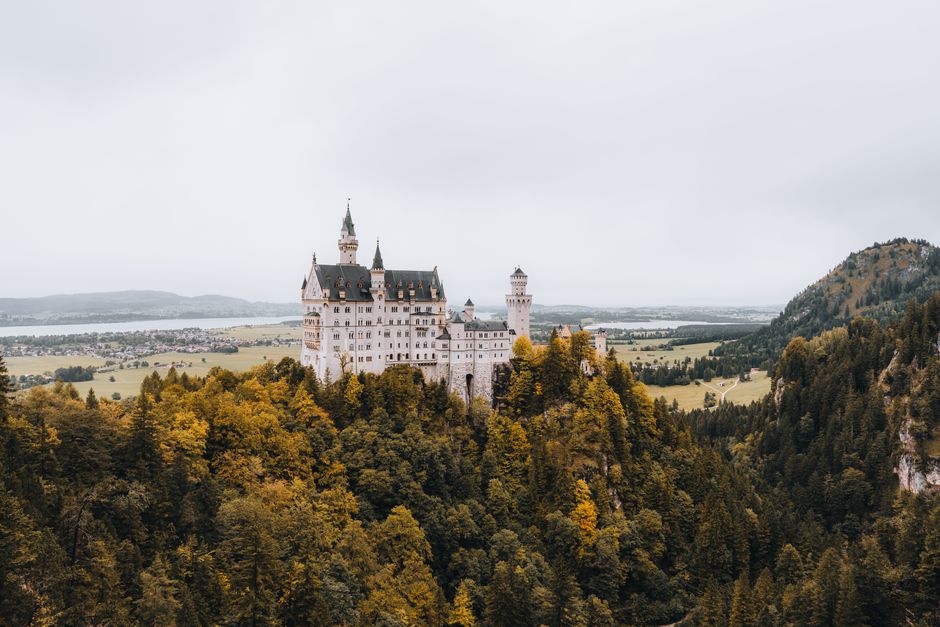
Neuschwanstein Castle: Germany's Most Famous Fairytale Fortress
King Ludwig II of Bavaria built Neuschwanstein in the 1860s and 1880s as a private retreat, and he only lived in it for about 172 days before he died under mysterious circumstances in Lake Starnberg. Walt Disney's team reportedly used it as inspiration for Sleeping Beauty's castle, and today it's the most photographed building in Germany, pulling in over 1.4 million visitors a year.

You can only get inside on a guided tour, and you can't just show up and buy a walk-in ticket during peak season, the ticket center in the village of Hohenschwangau sells out fast. Book online through the official Hohenschwangau ticket center at least a few weeks ahead for summer visits, and check current pricing there since ticket costs get adjusted periodically. The walk up from the village takes 30 to 40 minutes uphill, or you can take a horse carriage or shuttle bus partway.
- Avoid crowds: Show up for the first tour slot of the day, usually around 9am, or visit on a weekday in late autumn.
- Best photo spot: Marienbrücke (Mary's Bridge) behind the castle, but it sometimes closes for weather or renovation, so check the official site before you hike up.
- Combine it: Buy the combo ticket with neighboring Hohenschwangau Castle, Ludwig's childhood home, since you're already in the village.
Pro Tip: Base yourself in Füssen the night before. The first train or bus crowd from Munich doesn't arrive until mid-morning, so an early start from Füssen gets you inside before the tour buses show up.
Rhine Valley Castles: A River Route Past 40 Medieval Fortresses
The stretch of the Rhine between Koblenz and Bingen is a UNESCO World Heritage Site called the Upper Middle Rhine Valley, and it packs over 40 castles, fortress ruins, and hilltop towers into about 65 kilometers of river. This is the part of Germany that actually looks like the postcard, terraced vineyards, half-timbered towns, and a castle around basically every bend.

The trick most guides skip is that you don't have to pick one castle, this is a route. Marksburg Castle above Braubach is the only Rhine castle that was never destroyed, so it's the best one for seeing an intact medieval interior, torture chamber included. Rheinstein Castle near Trechtingshausen sits on a cliff and is one of the easiest to combine with a river cruise stop. Reichenstein and Sooneck are a short walk from each other above the town of Bingen.
You've got three ways to do this route. The KD Rhine cruise boats run between Koblenz and Rüdesheim seasonally and let you hop off at riverside towns to hike up to specific castles. The regional train line hugs both banks, stopping in towns like Bacharach, Kaub, and St. Goar, so you can train-hop and walk up to a different castle each stop. Or rent a car and drive the B9 or B42 riverside roads, which gives you the most flexibility but means someone's not drinking the local Riesling.
Best Castles Beyond Bavaria and the Rhine
Neuschwanstein and Eltz show up on every single castle list published, and for good reason, but stopping there means missing some of the country's best. Eltz Castle itself deserves the hype: it sits in a forest valley near Wierschem in the Moselle region and has been owned by the same family for over 33 generations. It was never destroyed in any war, so what you're touring is largely original medieval interior, not a 19th-century reconstruction.

Beyond that, three castles deserve a spot on your itinerary that almost never make the generic top-10s:
- Hohenzollern Castle, near Stuttgart, sits on a hilltop at 855 meters and was the ancestral seat of the Prussian royal family. The views over the Swabian Alps alone are worth the drive, and it feels far less crowded than Neuschwanstein even in July.
- Wartburg Castle in Eisenach, Thuringia, is where Martin Luther hid out and translated the New Testament into German in 1521. It's a UNESCO site and genuinely important to German history, not just a pretty facade.
- Heidelberg Castle, partially in ruins since it was blown up in the 17th century, overlooks the Neckar River and the old town below. The ruined sections make it feel more atmospheric than a fully restored castle.
If you've already done a big Pacific trip and covered the classic circuit, this list is the German equivalent of skipping the obvious stops. It's the same instinct behind a guide like Best Islands in Fiji Off the Tourist Trail: 2026 Outer Island Guide, go where the crowds aren't.
Best Time to Visit Germany's Castles in 2026
May and September 2026 are the sweet spot. Temperatures sit comfortably in the 15-22°C range, crowds are noticeably thinner than July and August, and the vineyards along the Rhine are either blooming or turning gold depending on the month. Winter (December through February) is quiet and moody, some castles like Neuschwanstein look genuinely striking under snow, but a handful of smaller regional castles reduce their hours or close entirely for the season, so check the official site before you plan a winter trip around one.
Summer works if you don't mind sharing the Marienbrücke viewpoint with 200 other people trying to get the same photo. If you're set on July or August, book every ticket you can in advance and start your days as early as possible. October is genuinely underrated: the Rhine Valley vineyards turn amber, Oktoberfest crowds keep everyone in Munich, and castle visitor numbers drop off noticeably. The same shoulder-season logic drives smart timing everywhere; it's why a coastal guide like Best Beaches in Namibia 2026: Skeleton Coast & Swakopmund Guide pushes travelers toward the cooler months too.
How to Plan a Germany Castle Tour: Routes, Passes, and Transport
Germany's train network makes castle-hopping easier than almost anywhere else in Europe. The Deutsche Bahn regional day passes (Länder-Tickets) cover unlimited regional trains within a state for one flat price, useful if you're doing a Bavaria-only or Rhineland-only loop. Check current pricing on the official Deutsche Bahn site since regional ticket structures get revised.
For a realistic route: fly into Frankfurt, spend two days doing the Rhine Valley by train and boat, take a train to Koblenz then down to Munich (about 4 hours direct), spend two days on Neuschwanstein and the Bavarian Alps, then rent a car for a loop through Hohenzollern and back. That's a tight but doable week covering three completely different castle regions.
If you'd rather drive the whole thing, a rental car gives you access to castles that trains don't reach well, like Eltz, which requires a 15-minute walk from the nearest parking lot regardless of how you arrive. Just know that German Autobahns have unlimited-speed stretches, so if you're not used to cars doing 200 km/h in the left lane, stay right unless you're passing.
Note: Some smaller regional castles only accept cash or card readers that don't work with foreign cards. Carry euros, especially for entry fees at family-run or municipally-operated sites outside the big tourist circuit.
Castle Etiquette, Tickets, and Costs to Know Before You Go
Pricing varies a lot by region and who owns the castle. State-run sites in Bavaria (Bavarian Palace Administration) tend to have fixed, published pricing you can check online. Privately owned castles like Eltz set their own rates and hours independently, and some regional ruins are free to walk around since they're just open ruins with no gate. Always check the specific castle's official page for current admission costs as of 2026 rather than trusting a number from an old blog post, since prices do get adjusted.
A few etiquette basics that trip people up: most interior tours don't allow photography inside, flash or otherwise, to protect original furnishings and artwork. Guided tours run on a strict schedule (Neuschwanstein tours are timed to the minute), so arrive at the meeting point at least 15 minutes early or you'll lose your slot with no refund. Many castles also require closed-toe shoes for the uphill walk, since paths can be gravel or uneven cobblestone.
Quick FAQ
How many castles are there in Germany? Estimates land around 20,000 castles, palaces, and fortress ruins, though the exact number depends on how loosely you define "castle."
What is the most beautiful castle in Germany? Neuschwanstein wins the popularity contest by a mile, but Eltz Castle and Hohenzollern Castle both have strong arguments if you want something less crowded with just as much visual payoff.
Do you need to book Neuschwanstein Castle tickets in advance? Yes, especially April through October. Book through the official Hohenschwangau ticket center rather than a third-party reseller.
Can you visit Rhine Valley castles without a car? Yes. Regional trains and seasonal river cruises both stop in the towns below the major castles, and several, including Marksburg and Rheinstein, are easy walks from a train station.
What is the best month to visit German castles? May, September, and October 2026 all offer good weather and noticeably smaller crowds than peak summer.
Are German castles expensive to visit? Not really. Most individual entry fees fall in a modest range, and many ruins and viewpoints are free. The bigger cost is usually transport and lodging, not tickets.
Final Word
Don't try to hit every famous name in one trip. Pick one region, Bavaria, the Rhine, or Thuringia, and actually explore it properly instead of racing between five castles in three days. You'll remember the one afternoon wandering Eltz's original medieval rooms a lot longer than a rushed photo stop at three different gates. And if castles have you thinking about other underrated corners of the world worth slowing down for, guides like Best Mountains in Bolivia for Hiking: 2026 Trekking Guide and Top Things To Do in Shibuya, Japan: 2026 Complete Guide follow the same idea: go deep on fewer places instead of skimming a checklist.
Common questions
- 01 Why does Germany have so many castles?
- Germany didn't become one country until 1871, so before that it was a patchwork of hundreds of independent kingdoms, duchies, and free cities that each needed their own fortress. Estimates put the total number of castles, palaces, and fortified ruins across modern Germany at over 20,000.
- 02 How do you actually get inside Neuschwanstein Castle?
- You can only visit on a guided tour, and tickets should be booked online through the official Hohenschwangau ticket center at least a few weeks ahead for summer visits. From the village of Hohenschwangau, the walk up takes 30 to 40 minutes uphill, or you can take a horse carriage or shuttle bus partway.
- 03 What's the best way to see the Rhine Valley castles?
- The stretch between Koblenz and Bingen is a UNESCO site called the Upper Middle Rhine Valley, packing over 40 castles and towers into about 65 kilometers. You can see them by hopping off the seasonal KD Rhine cruise boats, riding the regional train that stops in towns like Bacharach, Kaub, and St. Goar, or driving the riverside B9 or B42 roads.
- 04 When is the best time to visit Germany's castles in 2026?
- May and September 2026 are the sweet spot, with temperatures around 15-22C and noticeably thinner crowds than July and August. October is also underrated since the Rhine Valley vineyards turn amber and Oktoberfest keeps crowds in Munich, though winter visits should be checked in advance since some smaller castles reduce hours or close.
Heads up: some links in this article are partner links, so we may earn a small commission at no extra cost to you. Learn more.

