
Budget Travel
Palau Travel Cost 2026: Daily Budget, Diving & Entry Fee
A two-tank diving day in Koror runs $150 to $200, and the mandatory Pristine Paradise fee often gets bundled straight into your airfare.

-
01 / Verified & updated
October 2026
-
02 / Base hub
Roman Tmetuchl International Airport, Koror
-
03 / Primary transit
Connect via Guam (about 3.5 hours to Palau), Manila, or Taipei; no direct long-haul routes exist
-
04 / Verified cost
Pristine Paradise Environmental Fee around $100 per visitor, verify current rate officially
-
05 / Crowd-free window
October to May shoulder season for lower room rates and thinner crowds at Jellyfish Lake
-
06 / Region
Budget Travel
-
07 / Read time
10 min
Palau isn't cheap, and anyone telling you otherwise is probably skipping the diving. But it's also not the budget-destroying nightmare some blogs make it sound like. As of October 2026, you can realistically do Palau on $90 to $150 a day if you skip daily dives, or $250 to $400 a day if diving is the whole point of the trip. The flight in is usually your biggest single expense, followed by diving, and the mandatory entry fee catches almost everyone off guard because it's rarely mentioned until you're already booking.
Here's the real breakdown: what the Pristine Paradise Environmental Fee actually costs, what flights and rooms run, how liveaboard diving stacks up against land-based day boats, and three sample daily budgets you can map straight onto your own trip.

How Much Does a Trip to Palau Cost in October 2026?
Skip to the number: a non-diving trip to Palau runs about $90 to $150 per person per day once you're on the ground, not counting flights. Add diving and that climbs to $200 to $400+ per day, since two boat dives with gear rental alone can eat $150 of that.
What makes Palau pricier than, say, Samoa Travel Cost 2026: A Realistic Daily Budget Breakdown G isn't the food or the rooms. It's that almost everything revolves around boats. Getting to the Rock Islands, Jellyfish Lake, and most dive sites means paying for a boat and a guide, and there's no cheap public ferry system to fall back on like you'd find in a bigger archipelago.
October sits in Palau's wet season, which actually works in your favor financially. Dive operators and some guesthouses quietly drop rates when the dry-season (November to April) crowds haven't arrived yet, so you can shave 10 to 15% off accommodation costs just by traveling in the shoulder months.
The Pristine Paradise Environmental Fee: What It Covers and How to Pay
Every visitor to Palau has to pay the Pristine Paradise Environmental Fee (PPEF), a consolidated entry charge that folded together the old Green Fee, Rock Islands permit, and a few smaller levies into one payment. It's commonly cited at around $100, but fees like this get revised, so check the exact current figure on Palau's official Bureau of Immigration or Office of the President site before you fly rather than trusting a number you read somewhere else, including this one.
The fee funds reef conservation, Rock Islands Southern Lagoon ranger patrols, and the Jellyfish Lake access program, which is actually why the lake has stayed swimmable while similar sites elsewhere have closed from overcrowding. You'll also be asked to sign the Palau Pledge, a conservation commitment stamped right into your passport on arrival.

In practice, the PPEF usually gets bundled into your airfare at booking, especially on flights routed through Guam or Manila, rather than collected as a separate cash payment at the airport counter. Double check your e-ticket breakdown so you're not caught paying it twice, once through the airline and again at immigration.
Note: Entry fees change. Always verify the current PPEF amount and payment method on Palau's official immigration or tourism authority site before you book, not from a blog post written months earlier.
Flights and Getting to Palau
Flights dominate the total cost of a Palau trip more than any other line item. There's no budget-airline backdoor here. Most travelers connect through Guam on United, through Manila on Philippine carriers, or through Taipei on seasonal routes, since there's no direct long-haul service from the US mainland or Europe.
- From the US (via Guam): round trip fares typically land between $900 and $1,400, and Guam itself sits roughly 3.5 hours from Palau's Roman Tmetuchl International Airport.
- From Manila: expect $300 to $600 round trip, making the Philippines a cheaper gateway if your route allows a stopover.
- From Japan or Taiwan: seasonal and charter flights run $500 to $900, often tied to dive-season demand.
Book 2 to 3 months out if you can. Flights into Palau don't fluctuate as wildly as, say, routes into Fiji, but seats on the smaller connecting legs sell out fast once dive season ramps up in November. If you're also weighing visa logistics for a bigger Pacific loop, it's worth comparing against Do I Need a Visa for Fiji? Entry Rules & Costs for 2026 before you lock in a multi-stop itinerary.
Accommodation Costs: Koror Guesthouses vs Island Resorts
Koror, Palau's main hub, is where the budget options actually live. A basic guesthouse or backpacker-style room runs $35 to $60 a night, usually with a fan or basic AC, shared or private bath, and walking distance to the harbor where most dive boats depart.

Mid-range hotels in Koror land around $90 to $160 a night, and that's where most independent divers end up, since it's close to dive shops without paying resort markups. Step up to an island resort, like the overwater and beachfront properties out toward Meyuns or on private islets, and you're looking at $250 to $500+ a night, often with half-board included.
Nightly rates generally beat what you'd pay for an equivalent tier in Albania's Adriatic towns, which makes sense once you account for how everything, from mattresses to AC units, has to arrive by ship. If a full comparative view of a European budget trip is useful context, 2026 Cost of Travel in Albania: Ultimate Full Daily Budget G is a solid side-by-side.
Diving Costs in Palau: Liveaboard vs Land-Based
This is where Palau trips either blow the budget or stay reasonable, depending on how you dive. Land-based day diving out of Koror runs about $150 to $200 for a two-tank day, including gear rental, boat, and guide, with discounts if you book a multi-day package through the same shop.
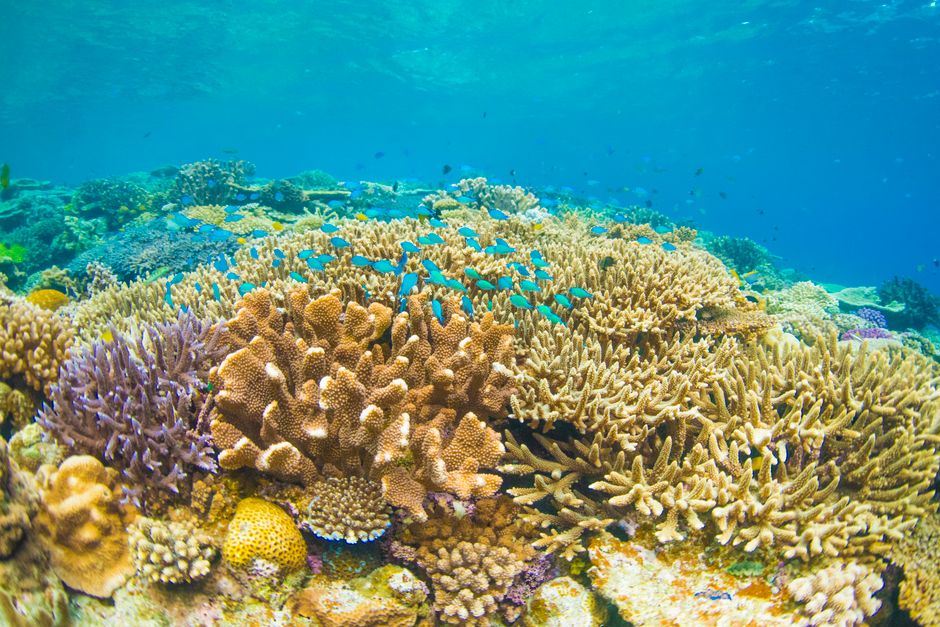
Liveaboards cost more upfront, usually $3,500 to $5,500 for a 7-night trip including meals and multiple dives a day, but when you divide that across the trip length it often works out to a similar or slightly higher per-dive cost than land-based diving, while getting you to remote sites like Blue Corner and German Channel without the 1 to 2 hour boat commute from Koror each way.
If your main goal is logging max dives at sites like Blue Corner, Siaes Corner, or the Ulong Channel current dives, a liveaboard saves transit time but not necessarily money. If you want cheaper days mixed with land time, sightseeing, or non-diving travel partners, land-based diving is the more flexible and usually more affordable route.
Food, Local Transport, and Other Daily Expenses
Food in Koror is manageable. A local meal at a noodle shop or barbecue stall runs $6 to $10, while a sit-down dinner at a tourist-oriented restaurant runs $15 to $30. Grocery staples cost more than you'd expect since most packaged goods are imported, so self-catering saves less here than it does in most countries.
- Taxis: Koror has no metered taxi system, so agree on a price before you get in, typically $5 to $10 for short in-town hops.
- Rental car: around $50 to $70 a day, worth it if you're exploring Babeldaob island's causeway sights independently.
- Rock Islands day tour: $80 to $120 per person, usually covering several lagoon stops, a beach, and sometimes snorkeling.
- Jellyfish Lake permit and hike: often bundled into the Rock Islands tour price, but confirm it's included before you book.
Tipping isn't deeply embedded in Palauan culture the way it is in the US, but dive guides and boat crews appreciate $5 to $10 per person per day if service is good.
Sample Daily Budgets: Backpacker vs Mid-Range vs Diver
These numbers exclude flights and the one-time PPEF entry fee, since those hit once rather than daily.

- Backpacker ($70 to $100/day): guesthouse room, local meals, one Rock Islands day tour every few days, minimal diving.
- Mid-range ($150 to $220/day): hotel room, mix of local and restaurant meals, a rental car for a couple of days, one or two dive days per week.
- Diver ($250 to $400+/day): mid-range or resort lodging, daily two-tank dives with gear, restaurant meals, occasional liveaboard add-on nights.
If you're coming from a cheaper trip like the ones covered in Lesotho Travel Cost 2026: Daily Budget for Lodging, Food & T, brace yourself. Palau's per-day costs run roughly double what you'd pay in a lot of landlocked budget destinations.
Money-Saving Tips for Visiting Palau
You don't have to skip diving or the Rock Islands to keep this trip under control. A few things actually move the needle:
- Book a multi-day dive package instead of single two-tank days. Most shops knock 10 to 20% off a 5-dive bundle.
- Travel in October or May, the shoulder months, for lower room rates and thinner crowds at Jellyfish Lake.
- Route through Manila rather than Guam if your starting point allows it. The fare difference is often several hundred dollars.
- Share a Rock Islands tour boat with other travelers from your guesthouse rather than booking a private charter.
- Eat where locals eat. The barbecue stalls near the Koror market cost a third of what hotel restaurants charge for a similar meal.
Pro Tip: Ask your dive shop if they bundle the Rock Islands permit into multi-day dive packages. Several do, which quietly saves you the cost of a separate sightseeing tour.
Common Questions About Palau Travel Costs
Is Palau expensive to visit in 2026?
It's pricier than most Southeast Asian or budget Pacific destinations, mainly because of flight costs and boat-dependent logistics, but a non-diving trip can still land around $90 to $150 a day.
How much is the Palau Pristine Paradise environmental fee?
It's commonly cited around $100 per visitor as of 2026, usually collected through your airfare, but confirm the current amount on Palau's official immigration site before booking.
How much does diving in Palau cost per day?
A land-based two-tank diving day including gear typically runs $150 to $200, while liveaboard trips average out to a similar or slightly higher per-dive cost once you factor in meals and remote site access.
What is a realistic daily budget for Palau?
Backpackers can manage on roughly $70 to $100 a day, mid-range travelers around $150 to $220, and divers doing daily dives should plan for $250 to $400 or more.
Do I need a visa to enter Palau in 2026?
Most nationalities, including US, EU, and many Asia-Pacific passport holders, can enter visa-free for stays up to 30 days, but you still need to pay the PPEF and sign the Palau Pledge, so check your specific nationality's requirement before flying.
Is it cheaper to dive Palau on a liveaboard or from land?
Land-based diving is usually cheaper and more flexible for shorter trips, while liveaboards cost more upfront but save transit time to remote sites like Blue Corner, so neither is a clear budget winner on a per-dive basis.
Palau rewards travelers who plan the boat-dependent parts ahead and skip the parts they don't actually need. Nail the flight routing, pick your diving style on purpose instead of by default, and the Rock Islands and Jellyfish Lake are well within reach without wrecking your budget. For a sense of how this compares against other visa-and-fee-heavy entry points, Do I Need a Visa for South Korea? K-ETA Cost & Rules for 202 is worth a look before your next Pacific or Asia leg.
Common questions
- 01 Is Palau expensive to visit in 2026?
- It's pricier than most budget Pacific or Southeast Asian destinations because of flight costs and boat-dependent logistics, but a non-diving trip can still run around $90 to $150 a day.
- 02 How much is the Palau Pristine Paradise environmental fee?
- It's commonly cited around $100 per visitor as of 2026, often collected through your airfare, but you should confirm the current amount on Palau's official immigration site before booking.
- 03 How much does diving in Palau cost per day?
- A land-based two-tank diving day including gear typically costs $150 to $200, while liveaboard trips work out to a similar or slightly higher per-dive cost once meals and remote-site access are included.
- 04 Is it cheaper to dive Palau on a liveaboard or from land?
- Land-based diving is usually cheaper and more flexible for shorter trips, while liveaboards cost more upfront but save transit time to remote sites like Blue Corner.
Heads up: some links in this article are partner links, so we may earn a small commission at no extra cost to you. Learn more.

