
Travel Tips
Top Vietnam Itinerary for 14 Days: From Hanoi to Ho Chi Minh City
A one-night Ha Long Bay cruise beats any day trip, and the Hai Van Pass drive between Hue and Hoi An is worth doing by car instead of the tunnel.

-
01 / Verified & updated
August 2026
-
02 / Region
Travel Tips
-
03 / Read time
12 min
Two weeks sounds like a lot until you actually try to fit Hanoi, Ha Long Bay, Hue, Hoi An, and Ho Chi Minh City into it. Vietnam is long and skinny, roughly 1,650 kilometers from top to bottom, so this isn't a trip where you base yourself in one spot and take day trips. You're moving every 2-3 days, and that's exactly what makes it work. Here's the route that actually covers the country without burning you out, plus where to add hills and history if you've got the appetite for it.

14-Day Vietnam Route at a Glance: Hanoi to Ho Chi Minh City
The classic north-to-south run hits five anchor points: Hanoi (2-3 days), Ha Long Bay (1-2 days, usually an overnight cruise), Hue (1-2 days), Hoi An (3 days, including a day trip to Da Nang), and Ho Chi Minh City (2-3 days, plus the Cu Chi Tunnels). You fly into Hanoi's Noi Bai airport and fly out of Ho Chi Minh City's Tan Son Nhat, which means you never backtrack.
Domestic flights bridge the long gaps. Hanoi to Hue is a 90-minute hop on Vietnam Airlines, Vietjet, or Bamboo Airways, and Da Nang to Ho Chi Minh City is another short flight. The rest is overland: trains, private cars, or the sleeper bus network that locals actually use. If you've read our Top Attractions and Activities to Do in Malaysia in 2026 piece, you'll recognize the pattern of using a regional hub airport to save hours of driving. Vietnam works the same way.

Book the Hanoi-Hue and Da Nang-Saigon flights at least 2-3 weeks out. Domestic fares in Vietnam swing hard with demand, and waiting until you land in the country usually costs you double.
Day-by-Day Itinerary: Hanoi, Ha Long Bay, Hue, Hoi An and Ho Chi Minh City
Here's the breakdown that actually holds up once you're on the ground.
Days 1-3: Hanoi
Land, sleep off the jet lag, then spend day two wandering the Old Quarter, eating bun cha at a plastic-stool stall, and visiting the Temple of Literature. Day three: Hoan Kiem Lake at sunrise, the Ho Chi Minh Mausoleum complex (closed Mondays and Fridays, check before you go), and an evening water puppet show at Thang Long Theatre.
Days 4-5: Ha Long Bay
A 2.5-hour drive gets you to the bay. Book a one-night boat cruise rather than a day trip. You'll kayak through limestone karsts, swim off the boat deck, and watch the sun drop behind the islands, which a day-tripper never sees. Cat Ba Island is the quieter, less-touristed alternative if the main bay feels crowded.
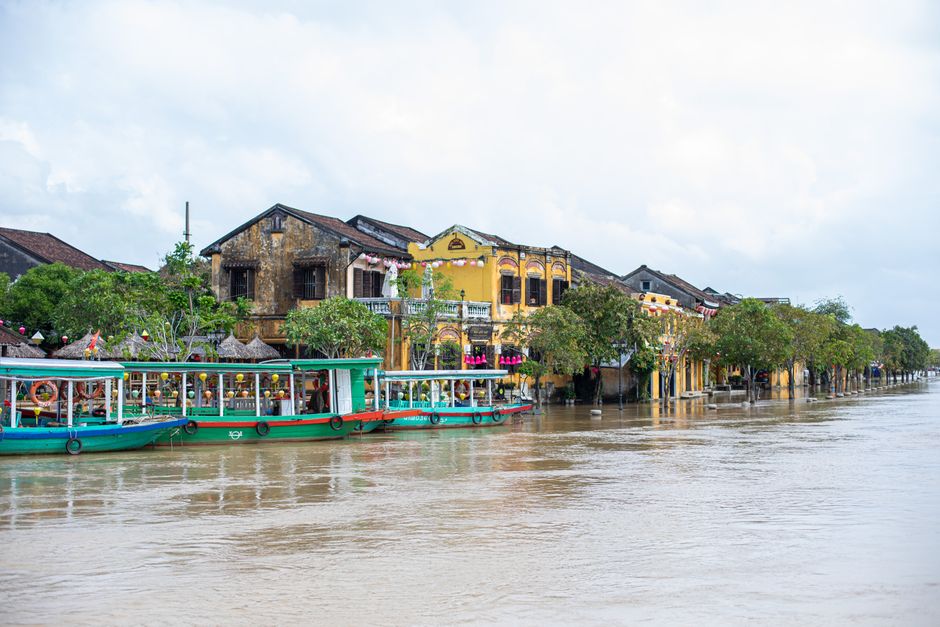
Days 6-7: Hue
Fly back to Hanoi, then straight on to Hue (or connect directly if your flight allows). Spend a full day in the Imperial City and the royal tombs along the Perfume River, then a night wandering the riverside night market. Hue's food scene, especially bun bo Hue and banh khoai, is reason enough to linger an extra half day.
Days 8-10: Hoi An and Da Nang
A 3-4 hour drive over the Hai Van Pass (do this by private car or motorbike, not the bus, the coastal views are worth it) drops you into Hoi An. Spend two days in the Ancient Town, get a custom suit or dress made (24-48 hour turnaround at most tailors), take a lantern-lit boat ride at night, and day-trip to My Son's ruins or the Marble Mountains near Da Nang.
Days 11-14: Ho Chi Minh City
Fly from Da Nang into Saigon (about 80 minutes). Spend your first day on War Remnants Museum and the Reunification Palace, then dedicate a half day to the Cu Chi Tunnels, about 90 minutes outside the city. Save your last full day for the Ben Thanh Market, a rooftop bar in District 1, and one proper meal of banh xeo before your flight out.
Pro Tip: Pack this itinerary loosely. Vietnam's internal flights get delayed often enough that a same-day connection between cities is risky. Build in one buffer day somewhere in the middle, ideally around Hue or Da Nang.
Hills, Mountains and Villages Worth the Detour
If 14 days feels tight for the classic route but you're craving highlands, you've got three real options, and you can only realistically fit one without gutting the coastal itinerary.
- Sapa is the easiest add-on. An overnight train or a new 5-hour highway drive from Hanoi gets you into rice terrace country, with Fansipan, Vietnam's highest peak, reachable by cable car if you don't want to hike it. Add 2 days minimum, ideally at the start of the trip before Ha Long Bay.
- Ha Giang is the wilder, less-touristed version, best done on a rented motorbike or with a local driver on the famous loop. It's more dramatic than Sapa but needs 3-4 days to do properly, which means cutting something else from this itinerary.
- Mai Chau is the low-commitment option, just 3-4 hours from Hanoi, with stilt-house homestays in Thai and Hmong villages. You can do it as an overnight without reshuffling the rest of your trip.

If highland trekking is really your priority over a straight north-south run, it's worth asking whether Vietnam is even the right trip this time around. Our Best Mountains in Nepal 2026: Trekking Guide covers terrain that goes a lot higher and further than anything in northern Vietnam.
Historic Places Along the Route
This itinerary is stacked with history almost by accident, since the north-to-south route runs straight through Vietnam's imperial and wartime past.
Hue's Imperial City was the seat of the Nguyen Dynasty from 1802 to 1945, modeled loosely on Beijing's Forbidden City. Large sections were damaged during the 1968 Tet Offensive, and restoration is still ongoing in parts, which is part of what makes walking through it feel real rather than polished for tourists.

Hoi An's Ancient Town, a UNESCO World Heritage Site since 1999, was a major trading port from the 15th to 19th centuries, and the merchant houses, the Japanese Covered Bridge, and the old canals are still mostly intact. Nearby, My Son holds the ruins of a Hindu temple complex built by the Champa Kingdom between the 4th and 13th centuries, similar in spirit to the temple complexes you'd find on a trip through the Top Things to Do in Peru 2026: A Complete Travel Guide, just tucked into jungle instead of mountains.
Down in Ho Chi Minh City, the Cu Chi Tunnels are the most visceral historic stop on the trip. This underground network stretched over 250 kilometers during the Vietnam War, and you can crawl through a widened section yourself. It's not a comfortable visit, but it's the one that sticks with people the longest.
What This 14-Day Trip Costs in 2026
Vietnam is still one of the cheapest countries in Southeast Asia to travel through, and that hasn't changed much heading into 2026. Here's a realistic mid-range breakdown, in USD, as of August 2026:
- Accommodation: $25-45/night for a clean 3-star hotel or a nice boutique guesthouse, so roughly $350-630 for 14 nights.
- Domestic flights: Hanoi-Hue and Da Nang-Saigon typically run $30-60 each way if booked a few weeks ahead, so budget $120-200 total.
- Ha Long Bay cruise: $80-150 for a one-night mid-range boat with meals included.
- Food: $10-20/day if you mix street food (a bowl of pho is often $1.50-3) with a few sit-down dinners.
- Local transport, tours, and entrance fees: $15-25/day covering Grab rides, museum tickets, and a guided tunnel or tailor visit.
- Visa fee: around $25 for the e-visa as of August 2026, though this is exactly the kind of number that shifts, so confirm the current rate on Vietnam's official e-visa portal before you apply.
Add it up and a mid-range 14 days lands around $1,100-1,700 per person, not counting international flights. Budget travelers sleeping in hostels and eating almost entirely street food can do it for closer to $700-900. If you want a sense of how that stacks up against another popular South American route, the cost breakdown in our Top Things to Do in Peru 2026: A Complete Travel Guide runs a similar mid-range figure, so Vietnam isn't dramatically cheaper than it used to be, it's just still good value.
Best Time to Visit Vietnam in 2026
Vietnam's length means the north and south run on different weather clocks, and there's no single perfect month for the whole trip.
North (Hanoi, Ha Long Bay): October through December and March through April are the sweet spots, with mild temperatures and lower humidity. Summer (June-August) gets hot and occasionally typhoon-prone, especially near the coast.
Central (Hue, Hoi An): February through May is driest and most pleasant. October through November brings the highest flood risk in this region, so it's worth avoiding if your schedule is flexible.
South (Ho Chi Minh City, Cu Chi): The dry season runs roughly December through April, with heat picking up from March onward. The wet season (May-November) brings short, heavy afternoon downpours rather than all-day rain, which is manageable if you plan indoor activities for early afternoon.
For this exact itinerary, February to April 2026 threads the needle best across all three regions. December and January work too, just pack a light jacket for Hanoi and Sapa, where nights get genuinely cold.
Practical Travel Tips for Vietnam in 2026
A few things that'll actually save you time and money on the ground.
Visas
Most travelers need an e-visa to enter Vietnam as of 2026, applied for online before arrival. Processing usually takes 3 business days but give it a full week to be safe. Some nationalities get short visa-free stays through bilateral agreements, so check your specific passport on the official portal rather than assuming.
Note: Visa rules and fees change without much warning. Always confirm current requirements on Vietnam's official e-visa site before booking flights, not from a blog post, including this one.
Money
The Vietnamese dong (VND) is the only currency accepted almost everywhere outside upscale hotels. ATMs are everywhere in cities but often cap withdrawals around 2-3 million VND per transaction, and most charge a fee on top of whatever your home bank charges. Bring a fee-free travel card if you can. Cash still rules for street food, markets, and small guesthouses.
Transport between cities
For the Hanoi-Hue and Da Nang-Saigon legs, fly. For Hue-Hoi An, take a private car or motorbike over the Hai Van Pass rather than the direct highway tunnel, since you'd miss the views entirely. The Reunification Express train is a scenic, slower alternative for any leg if you've got the extra hours and want to watch the coastline roll by.
Packing
Layer for temperature swings between Hanoi's cooler winters and Saigon's constant heat. Bring modest clothing (shoulders and knees covered) for temple and pagoda visits, a rain jacket regardless of season, and comfortable walking shoes for the Old Quarters and tunnel visits. Skip the heavy hiking boots unless you're adding the Sapa or Ha Giang detour.
How to Customize This 14-Day Itinerary
This route is a template, not a rulebook. Here's how to bend it.
Traveling slower: Drop Hue to 1 day and cut Ho Chi Minh City to 2, then add a third day in Hoi An and a fourth in Hanoi. Fewer transitions means less exhaustion, and Hoi An in particular rewards extra time.
Traveling with family: Skip the overnight boat in Ha Long Bay in favor of a day cruise if you've got young kids, since cabin space and toddler-proofing on junk boats is limited. Hoi An's Ancient Town and An Bang Beach are the most kid-friendly stops on the whole route.
Adding the highlands: If Sapa or Mai Chau is non-negotiable, cut Ha Long Bay to a day trip instead of an overnight cruise, and trim Ho Chi Minh City by a day. It's not a perfect trade, but it's the least painful way to fit both a coastal and a highland experience into 14 days. Readers who've done a similarly modular trip through Canada, mixing cities with wilderness, will recognize the logic from our Top 20+ Must-See Destinations in Canada 2026: Ultimate Guide, where the same swap-one-region-for-another approach applies.
Adding another country: Some travelers tack on Cambodia via a short flight from Ho Chi Minh City to Siem Reap for Angkor Wat, but that really needs its own 4-5 days and pushes this trip past two weeks. If you're the type who likes stacking a second cultural stop onto a trip, the temple-hopping logic is similar to what we cover in Top Things to Do in Morocco 2026: A Complete Travel Guide, where medina towns pair naturally with a desert extension.
FAQs
Is 14 days enough to see Vietnam from Hanoi to Ho Chi Minh City?
Yes, for the core route. Fourteen days covers Hanoi, Ha Long Bay, Hue, Hoi An, and Ho Chi Minh City comfortably without feeling rushed, as long as you fly the long overland gaps instead of driving them.
What is the best way to travel between cities in Vietnam?
Domestic flights for the long jumps (Hanoi-Hue, Da Nang-Saigon), and a private car or the train for shorter, scenic stretches like Hue-Hoi An over the Hai Van Pass.
Do I need a visa to visit Vietnam in 2026?
Most travelers do, via the e-visa system, though some passports get short visa-free stays under bilateral deals. Check your nationality on Vietnam's official e-visa portal before you book anything.
Should I visit Sapa or Ha Giang if I only have 14 days?
Sapa, if you're set on adding highlands. It only needs 2 extra days and is a short train or drive from Hanoi. Ha Giang is more dramatic but needs 3-4 days minimum, which is hard to justify without cutting the coast entirely.
How much does a 14-day Vietnam trip cost in 2026?
Expect roughly $1,100-1,700 per person for a mid-range trip, or $700-900 if you're budgeting hard, not including international flights. See the full breakdown above.
What is the best time of year to do this itinerary?
February through April 2026 balances the weather best across the north, center, and south. December and January also work, just pack for cooler nights in Hanoi and the highlands.
Common questions
- 01 What's the basic route for a 14-day Vietnam trip?
- The classic north-to-south route hits five anchor points: Hanoi, Ha Long Bay, Hue, Hoi An, and Ho Chi Minh City. You fly into Hanoi's Noi Bai airport and out of Ho Chi Minh City's Tan Son Nhat, so you never have to backtrack.
- 02 How do you travel between cities on this itinerary?
- Domestic flights bridge the long gaps, including a 90-minute hop from Hanoi to Hue and a short flight from Da Nang to Ho Chi Minh City. The rest of the journey is overland by train, private car, or sleeper bus.
- 03 When should you book flights for this trip?
- Book the Hanoi-Hue and Da Nang-Saigon flights at least 2-3 weeks in advance. Waiting until you land in the country usually costs you double because domestic fares swing hard with demand.
- 04 What makes the Cu Chi Tunnels worth visiting?
- The Cu Chi Tunnels are an underground network that stretched over 250 kilometers during the Vietnam War, and visitors can crawl through a widened section themselves. It's described as not a comfortable visit, but the one that sticks with people the longest.
Heads up: some links in this article are partner links, so we may earn a small commission at no extra cost to you. Learn more.

