a page from my travel notes
Bali: My Perspective on Safety, Crime, Monkeys, and Earthquake Risks
Scooter crashes and monkey scratches, not muggings, are what actually put Bali visitors in clinics. Rabies has circulated on the island since 2026, so any bite needs same-day care.


A few notes before you go
Updated
- Cost notes
- Bali tourist levy launched in 2024 at IDR 150,000 per foreign visitor; check Love Bali for the current 2026 rate
- Arrival point
- Ngurah Rai International Airport (DPS), Denpasar
- When to go
- Ubud Monkey Forest right after opening
Bali is safe for most travelers, but the things most likely to hurt you are not the ones people worry about. Violent crime against tourists is rare. A scooter crash on a wet road in Canggu is far more likely, and so is a macaque taking your sunglasses at Uluwatu, a dodgy money changer in Kuta, or three days of Bali Belly. This is my take on what actually goes wrong, roughly in order of how likely it is, and what you can do about each one before it happens.
I'm not going to scare you with worst-case stories. I'm also not going to pretend the island is risk-free. Bali sits on one of the most active stretches of the Pacific Ring of Fire, rabies has circulated on the island since 2008, and Indonesian drug laws are some of the harshest in the world. You can enjoy Bali and still take all of that seriously.

Is Bali Safe in 2026? My Honest Verdict Up Front
Yes. As of November 2026, Bali is one of the easier places in Southeast Asia to travel safely, including solo. Balinese culture is built around community and Hindu ritual, people are generally warm, and the tourist areas are used to millions of foreign visitors a year. Serious assaults on tourists happen, but they're uncommon.
The everyday risks are a different story. Here's how I'd rank them by real-world likelihood:
- Stomach trouble, the famous Bali Belly. Most people who stay a couple of weeks get at least a mild case.
- Road accidents, especially on rented scooters. This is the biggest physical risk on the island.
- Petty theft and scams, mostly in Kuta, Legian, Seminyak and Canggu.
- Animal bites and scratches from monkeys and stray dogs, which carry a rabies risk.
- Ocean hazards, mainly rip currents on the west coast surf beaches.
- Natural hazards like earthquakes and volcanic activity. Low daily odds, high consequences.
Notice that "getting robbed at knifepoint" isn't on the list. Plan around the top four and you've covered most of what goes wrong.
Crime in Bali: Petty Theft, Scams, and Where Violent Crime Fits In
Crime in Bali is overwhelmingly opportunistic. It clusters where tourists cluster: the Kuta to Canggu strip, nightlife streets in Seminyak, and busy spots in Ubud. Quieter areas like Sidemen, Amed or Munduk see far less of it. Here are the common ones, most likely first.
Snatch theft from scooters
Two people on a bike pull alongside you, the passenger grabs your phone or bag, and they're gone. It happens to pedestrians and to people riding scooters themselves. Carry your bag on the side away from the road, wear cross-body straps, and don't hold your phone out while walking along Jalan Legian or riding with Google Maps in one hand. Use a handlebar phone mount instead.
Money changer tricks
The classic con is the small street-side changer advertising a rate that's too good. They count your rupiah in front of you, then palm a few notes while "recounting." Stick to authorized changers with a PT company name and a printed receipt, such as the larger chains or bank counters. Count the cash yourself before you hand over your money, and don't let them touch it again after.
ATM skimming
Skimmers turn up on standalone ATMs, especially ones on quiet streets. Use machines inside banks, malls or minimarkets, cover the keypad, and check for loose parts on the card slot. Turn on transaction alerts with your bank so you spot anything odd the same day.
Rental and taxi scams
Scooter rental disputes are common: you return the bike and suddenly there's "new" damage. Photograph and video the scooter from every angle before you ride off, and never leave your passport as a deposit. For taxis, unmetered drivers at tourist hubs will quote inflated fares. Use metered Bluebird taxis or a ride-hailing app, and agree on a price up front if you do take a private driver.
Drink spiking and methanol
Drink spiking is reported in nightlife areas. Watch your drink being poured, don't leave it unattended, and look out for friends. A related risk is methanol in cheap or counterfeit spirits, which I cover in the health section below.
Violent crime
It exists, as it does everywhere, but it's rare against visitors. Most incidents I'd worry about involve late nights, heavy drinking and arguments. Avoid walking alone on dark beaches at 2am, and don't escalate disputes with locals or other tourists. In an emergency, call 112 (general emergency) or 110 (police). Bali also has a dedicated tourist police presence in the main resort areas.
Pro Tip: Split your cash and cards. Keep one card and some rupiah in your room safe, and carry only what you need for the day. A snatched bag then costs you an afternoon, not your trip.
Roads, Scooters, and Getting Around Without Getting Hurt
Traffic is the single biggest physical danger in Bali. Roads are narrow, traffic is heavy around Kuta, Seminyak, Canggu and Ubud, and dogs, potholes, gravel and offerings on the road all appear without warning. Afternoon rain in the wet season (roughly November to March) makes everything worse. A lot of hospital visits from foreign tourists come from scooter crashes, often involving people who rarely ride at home.
Licenses and the international driving permit
To ride legally as a tourist, you generally need your home license with a motorcycle category plus an International Driving Permit (IDP) that also covers motorcycles. A car-only license doesn't cut it. Rules and enforcement can change, so check the current requirements as of 2026 on the UK government's Indonesia travel advice or the US State Department's Indonesia page.
Here's the part people miss: riding without the right license doesn't just risk a fine at a checkpoint. Many travel insurance policies refuse claims for accidents when you weren't legally licensed, and that can turn a broken wrist into a five-figure bill.
Helmets and police checkpoints
Helmets are mandatory for rider and passenger. Wear one every single time, even for a two-minute run to the warung, and pick a helmet that actually fastens. Police checkpoints are common around tourist areas. They'll check your license, IDP and helmet. If you're missing something, expect a fine, so it's much easier to just be legal.
Ride-hailing apps and drivers
Grab and Gojek both work across most of south Bali and Ubud for cars and motorbike taxis. Some villages and beach areas have local transport cooperatives that restrict app pickups, so you may need to walk a bit or use a local driver. For day trips to places like Mount Batur, Sidemen or the north coast, hiring a private driver for the day is often the safest and least stressful option. Agree on hours, destinations and the full price before you leave.
Monkeys at Ubud and Uluwatu: How to Avoid Bites, Theft, and Rabies Risk
Bali's long-tailed macaques are cute right up until one is on your shoulder unzipping your backpack. The two places you'll meet them most are the Sacred Monkey Forest Sanctuary in Ubud and Uluwatu Temple on the Bukit Peninsula. They behave quite differently.

In Ubud, the monkeys are used to huge crowds and staff are on hand. Problems usually start when someone carries food, waves a plastic bag or tries to pose too close. At Uluwatu, the monkeys are famous thieves. They grab sunglasses, hats, phones and earrings, then wait for someone to trade food to get the item back. It's a learned trick, and they're very good at it.
How not to get bitten
- Bring no food, not even a snack in a zipped pocket. They can smell it.
- Stash loose items like sunglasses, hats and jewelry inside a closed bag before you enter.
- Avoid eye contact and showing teeth, which macaques read as a threat. That includes big smiles.
- Don't grab back if a monkey takes something. Tell staff and let them handle it.
- Stay calm if one climbs on you. Stand still, don't scream or swat, and it'll usually jump off.
- Keep kids close and never let them touch or feed the animals.
Going early, right after opening, tends to mean fewer people and calmer monkeys. Check current hours and ticket prices on the official Ubud Monkey Forest site.
What to do after a scratch or bite
Treat any bite or scratch that breaks the skin as a possible rabies exposure, whether it's from a monkey, a dog or a cat. Wash the wound with soap and running water for at least 15 minutes, apply an antiseptic, and get to a clinic or hospital the same day. You'll likely need a course of post-exposure vaccine shots, and possibly rabies immunoglobulin (RIG) if you haven't had pre-exposure vaccination. RIG isn't always in stock everywhere, which is one reason people pay for pre-trip shots.
Warning: Rabies is almost always fatal once symptoms appear, but it's preventable with prompt treatment. Don't wait to see if a scratch "looks bad." Get it checked the same day.
Stray and semi-owned dogs are the bigger rabies concern in Bali overall. Most ignore you, but give them space at night, don't run past packs, and never pet dogs you don't know.
Earthquakes, Volcanoes, and Tsunamis: Bali's Natural Hazard Reality
Bali sits on the Pacific Ring of Fire, where the Indo-Australian plate pushes under the Eurasian plate. Small earthquakes are frequent across Indonesia, and many are too weak for you to notice. Bigger ones happen less often but are a real possibility. The 2018 Lombok earthquakes next door were felt strongly in Bali, for example.

Mount Agung and Mount Batur
Mount Agung, Bali's highest peak, had a deadly eruption in 1963 that killed more than a thousand people. It became active again in 2017, when tens of thousands were evacuated and Ngurah Rai International Airport closed for several days, with further activity into 2019. Mount Batur, the popular sunrise trek, is also an active volcano. Authorities set exclusion zones around both when activity rises, and climbing routes can close at short notice.
Tsunami signs in Kuta and Sanur
Low-lying coastal areas such as Kuta, Legian, Sanur, Nusa Dua and Tanjung Benoa have blue tsunami evacuation route signs pointing inland or toward designated evacuation buildings. Spend two minutes on arrival noticing where those signs point from your hotel. If you feel a strong or long quake near the coast, or the sea suddenly pulls back, don't wait for an official alert. Head inland or to the upper floors of a solid building.
What to do in an earthquake
Drop, cover and hold on under sturdy furniture, away from windows and heavy objects. If you're outside, move away from buildings, walls and power lines. Once shaking stops, check official sources before going back inside or returning to the beach.
Where to check alerts in real time
BMKG, Indonesia's meteorology, climatology and geophysics agency, publishes earthquake and tsunami information on bmkg.go.id and its Info BMKG app. PVMBG, the volcanology agency, publishes volcano alert levels through MAGMA Indonesia, which also has an app. Follow alert levels and exclusion zones exactly, even if a tour operator says it's fine.
Volcanic risk is not unique to Bali. If you're planning more adventurous trips in the region, my Papua New Guinea rainforest safety guide covers a much more remote version of the same planning mindset.
Bali Belly, Water, and Health Precautions
Bali Belly is traveler's diarrhea, usually from contaminated food, water or ice. It's rarely serious, but it can wipe out a few days. Don't drink tap water, including for brushing teeth if your stomach is sensitive. Bottled water and refill stations are everywhere. Ice in established restaurants is usually factory-made and fine, but be more careful at roadside stalls.
For food, pick busy warungs where dishes are cooked fresh and hot. Be cautious with buffets that have been sitting out, raw salads in cheap places and undercooked seafood. Pack oral rehydration salts. If you have a high fever, blood in your stool, or symptoms lasting more than a few days, see a doctor.
Methanol in unlicensed spirits
Methanol poisoning from counterfeit or home-brewed alcohol, including some cheap arak, has caused deaths and blindness among tourists in Indonesia. Stick to sealed, branded bottles and reputable bars, and be wary of suspiciously cheap cocktails or bucket deals. Early symptoms can look like a bad hangover, then blurred vision. Treat that as an emergency.
Vaccines, dengue and insurance
Commonly recommended vaccines for Indonesia include hepatitis A, typhoid and tetanus, with rabies pre-exposure and Japanese encephalitis considered for longer stays or rural travel. Talk to a travel clinic 6-8 weeks before you fly, and check the CDC Indonesia page for current advice. Dengue is spread by daytime-biting mosquitoes, so use repellent with DEET or picaridin through the day, not just at dusk.
Travel insurance is non-negotiable. Make sure your policy explicitly covers motorbike riding (and its license conditions), medical evacuation and hospital care. Comparing costs across destinations? My Cook Islands daily budget breakdown and Albania travel costs in 2026 both factor insurance into a realistic budget.
Ocean Safety, Rip Currents, and Cultural Etiquette That Keeps You Out of Trouble
The west coast beaches from Kuta through Legian, Seminyak and Canggu have strong surf and rip currents. Drownings happen. Swim only between the red and yellow flags where Balawista lifeguards are posted, and stay out when red flags are up. If a rip pulls you, don't fight it. Swim parallel to shore until you're out of it, then head back in, or float and signal for help.
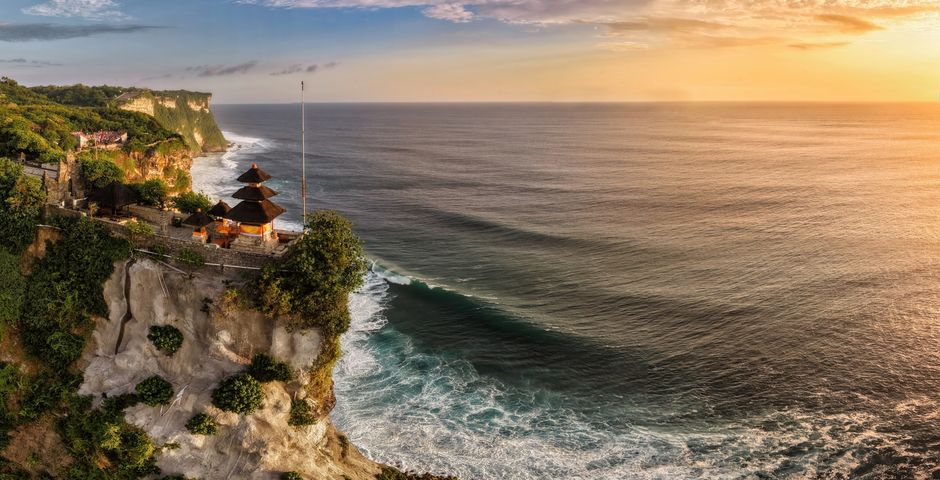
For calmer water, the reef-protected beaches at Sanur, Nusa Dua and Jimbaran are much better for weak swimmers and kids. Uluwatu's beaches are mainly for experienced surfers, with sharp reef and big waves.
Temple dress codes
At temples, cover your shoulders and knees, and wear a sarong and sash. Many temples lend or rent them at the entrance. Don't climb on shrines, don't stand higher than priests or offerings, and step around the small offerings on the ground. Women who are menstruating are traditionally asked not to enter temples.
Drug laws
Indonesia's drug laws are severe. Possession can mean long prison terms, and trafficking can carry the death penalty. People do get offered drugs in nightlife areas, and some offers are setups. Just say no.
Visitor rules and the tourist levy
Bali introduced a tourist levy for foreign visitors in 2024, set at IDR 150,000 at launch. Fees and rules can change, so check the amount and pay through the official Love Bali site as of 2026, not through third-party sites. The provincial government has also published visitor dos and don'ts covering temple behavior, dress, and respecting sacred sites. Breaking them can lead to fines or deportation.
My Bali Safety Checklist Before You Fly
Most of Bali's risks get smaller with ten minutes of prep. Here's what I'd sort before and right after landing:
- Visa and e-VOA: Check whether you need a Visa on Arrival and apply online through the official Indonesian e-Visa portal. Fees change, so confirm the current rate there.
- Tourist levy: Pay through Love Bali before you arrive and keep the QR code handy.
- Insurance: Confirm it covers scooters, medical evacuation and hospital care. Save the emergency claim number in your phone.
- License and IDP: Only if you'll ride. Motorcycle category on both.
- Document copies: Photos of your passport, visa, insurance and license stored offline and in the cloud.
- Emergency numbers: 112 general, 110 police, 118 or 119 ambulance, 113 fire.
- Offline maps: Download Bali in Google Maps or Maps.me for patchy signal areas.
- Alert apps: Info BMKG for earthquakes and tsunamis, MAGMA Indonesia for volcano levels.
- Health kit: Rehydration salts, repellent, antiseptic and any prescriptions.
Pro Tip: On your first evening, note the nearest international-standard hospital to where you're staying and the direction of the tsunami evacuation signs. It takes five minutes and you'll never have to think about it again.
Visa rules differ a lot across Asia. If Bali is one stop on a longer trip, check my South Korea K-ETA rules for 2026 or plan a very different kind of trip with my Uzbekistan Silk Road route.
Common Bali Safety Questions
Is Bali safe for solo female travelers in 2026?
Generally yes. Bali has a large solo travel community, especially in Ubud and Canggu. Use the same care you would anywhere: watch your drink, use ride-hailing apps at night, avoid empty beaches after dark, and choose well-reviewed accommodation.
Are the monkeys in Ubud Monkey Forest dangerous?
They're not aggressive by default, but they will grab food and loose items and can bite if they feel threatened. Bring no food, avoid eye contact and treat any scratch as a possible rabies exposure.
How often do earthquakes happen in Bali, and what should I do if one hits?
Small quakes are frequent across Indonesia and most go unnoticed. Strong ones are less common. Drop, cover and hold on, and if you're on the coast after a strong or long quake, move inland or upward without waiting for an alert.
Is it safe to rent a scooter in Bali without an international driving permit?
It's not legal, and it's risky. You can be fined at checkpoints, and your insurance may refuse to pay for an accident. Use Grab, Gojek or a driver instead.
Should I get a rabies vaccine before traveling to Bali?
Consider it seriously, especially for long stays, rural travel or if you'll be around animals. Pre-exposure shots simplify treatment after a bite. Ask a travel clinic for advice.
Which areas of Bali have the most petty crime?
Kuta, Legian, Seminyak and Canggu see the most snatch theft and scams because that's where the crowds and nightlife are. Busy parts of Ubud get some too.
Common questions
- 01Is it safe to rent a scooter in Bali without an international driving permit?
- It isn't legal, since you generally need a home motorcycle license plus a motorcycle-valid IDP, and insurers may refuse claims for unlicensed riders. Grab, Gojek or a private driver are safer options.
- 02Are the monkeys in Ubud Monkey Forest dangerous?
- They aren't aggressive by default but will grab food and loose items and may bite if threatened, so bring no food, avoid eye contact and get any scratch checked the same day for rabies.
- 03How much is the Bali tourist levy?
- It launched in 2024 at IDR 150,000 per foreign visitor, but fees can change, so check and pay the current amount on the official Love Bali site.
- 04Which areas of Bali have the most petty crime?
- Kuta, Legian, Seminyak and Canggu see the most snatch theft and scams, with some in busy parts of Ubud.
If you book through a partner link, we may earn a commission at no extra cost to you. Learn more.

