
Hills
Best Hills in Rwanda for Hiking: 2026 Land of a Thousand Hills Guide
Nyungwe's canopy walk connects hilltop trails 50 meters up, while Kigali's Mount Kigali climb needs zero park permit, just good shoes and an early start.

-
01 / Verified & updated
August 2026
-
02 / Base hub
Kigali
-
03 / Verified cost
$1,500 per person for gorilla permits (separate from hiking permits), and $10 to $20 for a guided village and tea plantation walk near Lake Kivu
-
04 / Crowd-free window
June through September is the main dry season and peak hiking time, with a shorter dry window from December through February
-
05 / Region
Hills
-
06 / Read time
9 min
Rwanda calls itself the Land of a Thousand Hills for a reason, and once you're on the ground you'll swear the nickname undersells it. Every road bends around another ridge, every village sits on a slope, and the horizon is just layer after layer of green folds stretching toward the Congo border. This guide skips the summit-height rankings you've probably already read and focuses on where you can actually put your boots on the ground, from volcano foothills to city walks you can do before breakfast, as of August 2026.

Why Rwanda Is the Land of a Thousand Hills
Rwanda's terrain formed where the Albertine Rift tore through East Africa, pushing up volcanic peaks in the northwest and leaving behind a rippled landscape of hills that cover almost the entire country. There's no real lowland to speak of. Farmers have terraced these slopes for generations, which is why so many hikes here pass through banana groves and tea rows instead of empty wilderness.
That density matters for planning. Rwanda is roughly the size of Massachusetts, and Kigali sits close to the geographic middle, so you can base yourself in the capital and reach volcano trails, forest hikes, or Lake Kivu in a half day's drive. *This is one of the few countries where a hill-focused trip and a wildlife trip overlap almost entirely.*
Volcanoes National Park: Hiking the Virunga Hills and Volcanoes
Most people book Volcanoes National Park for gorilla trekking and never think about the hiking on offer, but the Virunga chain has some of the best volcanic hill trails in East Africa. Mount Bisoke (3,711m) is the go-to day hike: a 6 to 7 hour round trip through bamboo forest to a crater lake at the summit, steep in the final push but doable for anyone with average fitness. Mount Karisimbi is the tougher cousin at 4,507m, usually done as a two-day trek with an overnight camp, and it's genuinely cold up there, so pack layers regardless of the season.
Less talked about are the lower slopes around Sabyinyo, where guided walks stay below the summit push and focus on the saddle areas between peaks. These are shorter, gentler outings that still give you volcanic scenery and a shot at golden monkeys without the altitude grind.
Combining Hills With Gorilla Trekking
Gorilla permits run separately from hiking permits and cost $1,500 per person as of the last published Rwanda Development Board rate, though you should always confirm current pricing on the official Visit Rwanda site before booking, since fees have shifted before. A smart move is stacking a gorilla trek one day with a Bisoke hike the next, since both leave from the same park headquarters in Kinigi.
Nyungwe Forest Hills and the Canopy Walk Trails
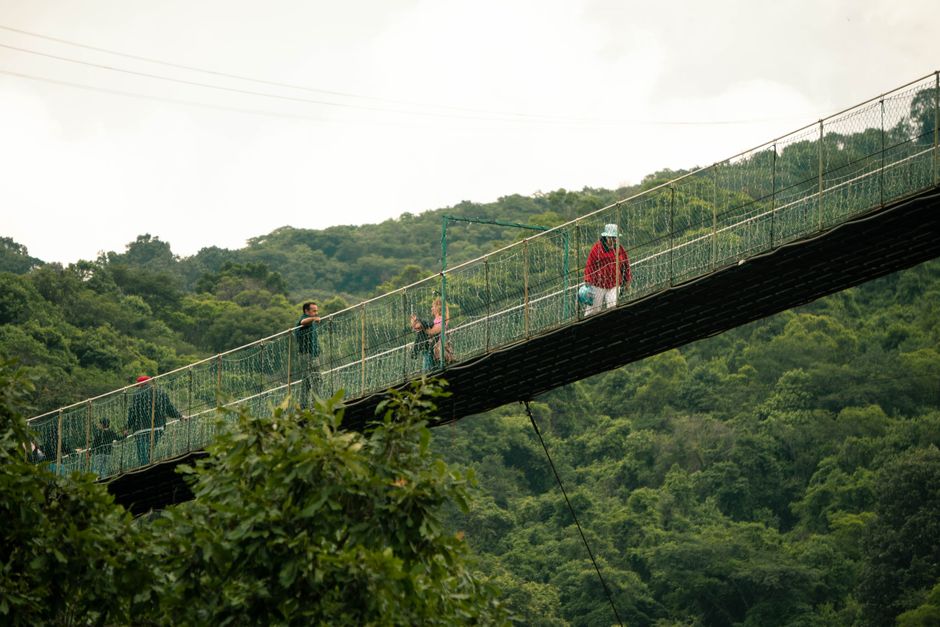
Nyungwe National Park in southwest Rwanda gets a fraction of the attention Volcanoes gets, which is strange because its rolling rainforest hills offer some of the country's best trekking. The terrain here is different: instead of volcanic cones, you're moving across ridgelines cloaked in montane forest, with over 130 kilometers of maintained trails ranging from a 2-hour loop to a full-day traverse.
The headline attraction is the canopy walk, a 160-meter walkway (90m+45m+25m sections), about 70 meters above the forest floor. It's not a hardcore hike on its own, more of a 2 to 3 hour loop, but it pairs well with a longer trail like the Igishigishigi or Umuyove trail if you want more distance. Chimpanzee tracking happens in these same hills, usually starting before dawn since the troops move fast once the sun's up.
- Isumo Trail: a half-day hike through hill forest ending at a waterfall, good for a moderate first outing.
- Bigugu Trail: the toughest option in the park, climbing to Nyungwe's highest point at 2,950m through dense hill terrain.
- Congo-Nile Divide Trail access points: several trailheads inside Nyungwe connect straight onto the long-distance route covered below.
Kigali's Hills: Walkable City Views and Neighborhood Climbs
Nobody writes about this, and it's a genuine gap, because Kigali itself is built across a handful of steep hills and walking between them is one of the best free things to do in the city. Mount Kigali on the western edge rises to about 1,850m and takes roughly 2 hours round trip from the base, ending with a full skyline view over the city's other ridges.
Closer to downtown, the climb from Nyarugenge up toward Kiyovu is steep enough to feel like a workout but short enough to do in street shoes, and it's a good way to see how the city's neighborhoods stack by elevation, wealthier areas tend to sit higher with better views and cooler air. Kigali is also one of the cleanest and safest capitals in East Africa, so early morning hill walks before the heat builds are common among locals, not just tourists.

Pro Tip: Kigali's hills have no permit system at all. Grab a guide from your hotel or just follow Mount Kigali's marked path, and budget half a day including transport back down.
The Congo-Nile Divide Trail: Rwanda's Ultimate Multi-Hill Trek
If you want the full thousand-hills experience in one go, this is it. The Congo-Nile Divide Trail runs roughly 227 kilometers along the ridge separating the Congo and Nile watersheds, from Karongi (Kibuye) on Lake Kivu down to Rusizi near the Burundi border. It strings together dozens of individual hills, tea plantations, and forest sections including part of Nyungwe.
Most hikers don't do the whole thing. It's commonly split into 2 to 8 day segments, and you can walk shorter stretches like the Kibuye to Nyamagabe leg if you want a taste without committing a full week. Accommodation along the way ranges from basic guesthouses to community-run homestays, and a local guide is functionally required since the trail isn't signposted the way European long-distance routes are.
Lake Kivu Hillside Villages and Tea Plantation Hikes
Lake Kivu's shoreline is where Rwanda's hill terrain gets its softest, most photogenic version. The hills here drop straight into the water, and walking trails weave through fishing villages, coffee farms, and the tea estates around Gisakura and Kitabi near Nyungwe's edge. These are lower-effort hikes, mostly 1 to 3 hours, built more around the views and village life than physical challenge.
Base yourself in Kibuye or Rubavu for lake access, then arrange a half-day tea plantation walk through your guesthouse. Costs run low, often $10 to $20 for a guided village and plantation walk, though you should confirm with your host since rates vary by operator. It's a good counterpoint to the volcano and forest hikes if your legs need a rest day that still gets you outside.
Best Time to Hike Rwanda's Hills and What to Pack
Rwanda has two dry seasons: June through September and a shorter window from December through February. The mid-year dry season is peak hiking time, with firmer trails and better summit visibility on Bisoke and Karisimbi. Rain outside those windows isn't a dealbreaker, it just makes volcanic slopes muddier and the canopy walk in Nyungwe slicker underfoot.
- Waterproof hiking boots, non-negotiable for Nyungwe and volcano trails.
- Layers, since Karisimbi and Bisoke summits sit near freezing even in dry season.
- Gardening gloves, oddly essential on Volcanoes hikes since stinging nettles line parts of the trail.
- Rain jacket, packed regardless of month since Nyungwe gets rain year-round.
Planning Your Rwanda Hills Trip: Permits, Guides, and Costs
Permit rules depend entirely on which hills you're targeting. Volcanoes National Park hikes, including Bisoke and Karisimbi, require a park permit and a licensed guide, booked through the Rwanda Development Board. Nyungwe trail permits and chimp tracking permits are separate and booked through the park office in Kitabi or Uwinka. Prices shift, so check the Visit Rwanda official site for current rates as of August 2026 rather than trusting a number from an old blog post.
Kigali's hills, Lake Kivu village walks, and most tea plantation routes need no permit at all, just a local guide if you want context. Book gorilla and volcano permits at least 2 to 3 months ahead in high season since daily group sizes are capped.
Note: Rules and fees change. Always verify permit requirements on the official Rwanda Development Board channels before finalizing your itinerary.
FAQs: Hiking Rwanda's Hills
What are the best hills to hike in Rwanda for beginners?
Kigali's Mount Kigali walk, the Lake Kivu village hikes near Kibuye, and Nyungwe's canopy walk loop are all beginner-friendly, none require technical skill and all can be done in half a day.
Do you need a permit to hike in Rwanda's national parks?
Yes, for Volcanoes National Park and Nyungwe National Park you need a paid permit and a licensed guide. Hills outside the parks, including Kigali and most Lake Kivu areas, don't require one.
How difficult is hiking Mount Bisoke compared to Nyungwe trails?
Bisoke is steeper and higher, with a tougher final push and thinner air near the crater. Most Nyungwe trails are longer in distance but gentler in grade, aside from the Bigugu Trail, which rivals Bisoke in effort.
Can you hike Rwanda's hills without a guide?
Inside the national parks, no, a guide is required by park rules. Outside them, in Kigali or the Lake Kivu region, you can walk independently, though a local guide adds context and helps with route-finding on unmarked village paths.
What is the best time of year to hike in Rwanda?
June through September is the main dry season and the most reliable window for volcano summits. December through February offers a shorter secondary dry spell that also works well.
Are there hill walks near Kigali that don't require a park permit?
Yes, Mount Kigali and the neighborhood climbs around Nyarugenge and Kiyovu are free to walk, no permit or park fee involved.
Rwanda's hills reward the kind of trip most guides don't map out for you, mixing a volcano summit with a forest canopy walk and an afternoon wandering Kigali's own ridgelines. If you're stacking this with other African travel, check current entry rules before you go, similar to how South Africa's visa rules by country work for a neighboring itinerary. And if hill country is your travel theme this year, it's worth comparing notes with hill regions elsewhere, from the hills and castles across India to the ridge towns covered in our Slovenia castles cost guide. Whatever else is on your list, Rwanda's hills hold up on their own.
Common questions
- 01 What is the best day hike in Volcanoes National Park?
- Mount Bisoke at 3,711m is the go-to day hike, a 6 to 7 hour round trip through bamboo forest to a crater lake at the summit. Mount Karisimbi at 4,507m is tougher and usually done as a two-day trek with an overnight camp.
- 02 Can I hike hills in Kigali itself?
- Yes, Mount Kigali on the western edge rises to about 1,850m and takes roughly 2 hours round trip from the base, ending with a skyline view over the city. There is no permit system for Kigali's hills, so you can grab a guide from your hotel or follow the marked path.
- 03 What is the Congo-Nile Divide Trail?
- It is a roughly 227 kilometer trail running along the ridge separating the Congo and Nile watersheds, from Karongi (Kibuye) on Lake Kivu down to Rusizi near the Burundi border. Most hikers split it into 2 to 8 day segments rather than doing the whole thing.
- 04 When is the best time to hike Rwanda's hills?
- Rwanda has two dry seasons, June through September and a shorter window from December through February, with the mid-year season being peak hiking time due to firmer trails and better summit visibility. Rain outside those windows just makes volcanic slopes muddier and the Nyungwe canopy walk slicker.
Heads up: some links in this article are partner links, so we may earn a small commission at no extra cost to you. Learn more.

