
Mountains
10+ Breathtaking Destinations You Must Visit in Switzerland 2026
The Matterhorn Glacier Paradise cable car climbs to 3,883 meters, the highest cable car station in Europe, and it's just one stop on a route through Lauterbrunnen's 72 waterfalls and Chillon Castle.

-
01 / Verified & updated
August 2026
-
02 / Region
Mountains
-
03 / Read time
12 min
Switzerland doesn't need much of an introduction, but it does need a plan. The country is small enough that you can see snow-capped peaks, a medieval castle, and a glassy lake in the same afternoon, yet it's expensive enough that a badly planned trip burns cash fast. This guide walks through the places worth your limited days in 2026, plus the actual logistics: what things cost, when to go, and how to get between towns without renting a car you don't need.

Why Switzerland Belongs on Your 2026 Travel List
You've probably seen the postcard shot: a green valley, a wooden chalet, a jagged peak behind it. What the postcard doesn't show you is how fast the scenery changes. Drive twenty minutes from a glacier and you're at a vineyard on Lake Geneva. Take a forty-minute train from a cosmopolitan capital and you're staring at cows with bells on a 2,000-meter ridge.
The country packs four language regions, four distinct landscapes, and a rail network that's genuinely one of the best in the world into an area smaller than Maine. That density is the whole appeal. You're not choosing between mountains and lakes and old towns, you're getting all three without burning a week in transit.
2026 is also a fine year to go simply because the infrastructure keeps getting better. New cable car cabins at several resorts, upgraded panoramic train cars on routes like the GoldenPass Express, and expanded e-bike rental networks in towns like Grindelwald and Zermatt all make the classic sights easier to reach than they were even a few years back.
Zermatt and the Matterhorn: Switzerland's Iconic Mountain Town
Zermatt is the one everyone's seen a photo of without knowing it. The Matterhorn's pyramid shape has been used on everything from chocolate bars to ski resort logos worldwide, and standing under the real thing hits different than the branding ever could.
The town itself is car-free, which keeps it quiet. You arrive by train into Zermatt station (no driving in, park in Täsch and hop the shuttle train instead), then walk or take an electric taxi to your hotel. For the mountain itself, the Matterhorn Glacier Paradise cable car takes you up to 3,883 meters, the highest cable car station in Europe, with views into Italy on a clear day.
- Best viewpoint without a cable car ticket: the walk to Gornergrat via the cogwheel railway gives you a side-on view of the Matterhorn that's arguably better than the summit-station shot.
- Budget move: the 5-Lakes Trail (Funf-Seen-Weg) is free once you're up the mountain and gives you Matterhorn reflection shots without paying for the top station.
- Skip the crowds: go up on the first cable car of the day, usually around 8:30am, before the tour groups arrive.

Check the Matterhorn Paradise official site for current cable car prices before you go, since lift tickets here run into the triple digits in Swiss francs and change seasonally.
Lauterbrunnen Valley and the Jungfrau Region
If Zermatt is the icon, Lauterbrunnen is the sleeper hit. This valley has 72 waterfalls dropping off sheer cliff walls, and it's genuinely one of the reasons Tolkien is said to have pictured Rivendell the way he did. The Staubbach Falls drop almost 300 meters right behind the village, and you can walk to the base in about ten minutes from the train station.
From Lauterbrunnen, three villages fan out up the mountainside, each with its own personality. Wengen is car-free and quiet, reachable only by cogwheel train, and it's the classic base for hiking the Jungfrau region without the Zermatt-level crowds. Grindelwald sits on the other side of the valley and works better if you want more restaurants and a livelier evening scene. Murren, perched at 1,650 meters, is the smallest and arguably has the best direct view of the Eiger, Monch, and Jungfrau trio.
Pro Tip: Take the Schilthornbahn cable car up from Murren to the Schilthorn summit at 2,970 meters. It's where the James Bond film "On Her Majesty's Secret Service" was partly shot, and the revolving restaurant at the top has one of the best 360-degree Alpine panoramas in the region.

Hikers should plan at least two full days here. The trail from Wengen to Kleine Scheidegg, then down to Grindelwald, is around 4-5 hours and stays mostly flat with the Eiger north face looming the entire way.
Interlaken: Gateway Between Two Lakes
Interlaken sits, literally, between two lakes: Lake Thun to the west and Lake Brienz to the east. That position, plus its train connections to Lauterbrunnen, Grindelwald, and beyond, makes it the default base camp for the entire Bernese Oberland region.
The town leans heavily into adventure tourism. Paragliding, canyoning, and skydiving operators line the main street, and tandem paragliding here is one of the more reasonably priced adrenaline activities in the country. You'll land in a field with the lake and mountains spread out below you, which is a hard experience to top.
But don't skip the quieter version of Interlaken either. A boat cruise on Lake Brienz shows off water so turquoise it looks photoshopped, and it's fed by glacial runoff that gives it that color naturally. The lakeside town of Iseltwald, a short bus or boat ride away, has become a minor pilgrimage site after appearing in a popular Korean drama, so expect some crowds at its single wooden pier.
Interlaken is also a smart place to base yourself if you're weighing options across the continent. If you've already done the Alps and want to compare notes, the piece on exploring the fjords of Norway covers a different but equally dramatic kind of mountain-and-water landscape.
Lake Geneva and Chillon Castle
Lake Geneva (Lac Leman to locals) is the largest lake in Switzerland, and its shoreline runs from the city of Geneva itself all the way to Montreux, passing through vineyard terraces that are UNESCO-listed for a reason. The Lavaux vineyards between Lausanne and Montreux are worth a slow train ride just to watch the vines roll by the water.
The single biggest landmark on the lake is Chillon Castle, sitting on its own small island just outside Montreux. It's one of the most visited historic sites in Switzerland, and unlike a lot of medieval castles that are mostly ruins, Chillon is fully intact inside, with vaulted halls, a dungeon that inspired Lord Byron's poem "The Prisoner of Chillon," and Gothic windows that frame the Alps across the water.
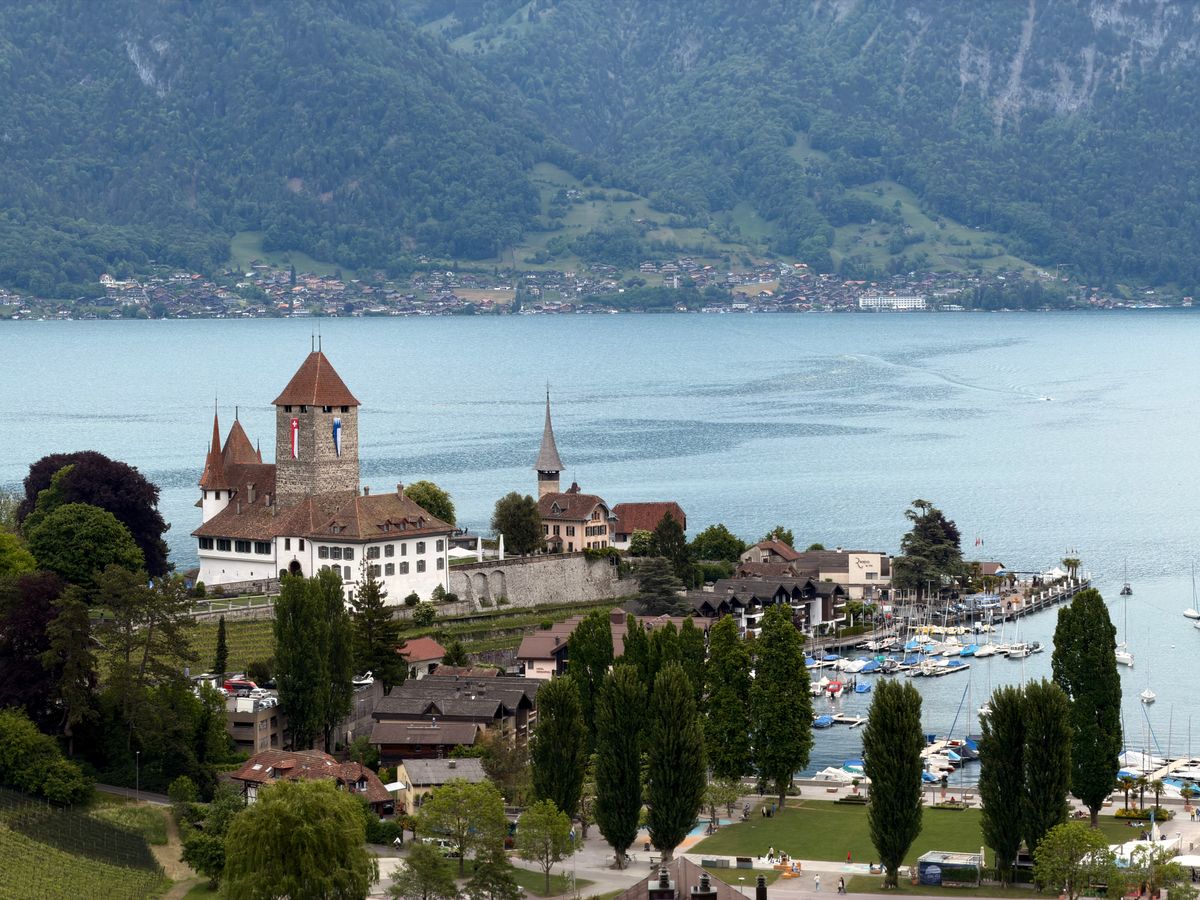
Entry tickets are sold on the official Chillon Castle website, and it's worth checking current prices there since they've been adjusted a few times in recent seasons. Getting there is easy: a direct train from Geneva or Lausanne to Montreux, then a 20 minute lakeside walk or a short bus ride.
If castles are your thing, this pairs well with a completely different European castle circuit. The cost to visit Slovenia's castles at Bled, Ljubljana, and Predjama is a useful comparison if you're trying to figure out where your castle budget goes further, and Bavaria's fairytale castles just across the border make an easy add-on if you're routing through southern Germany.
Lucerne and Mount Pilatus
Lucerne is the old town most people picture when they think "Switzerland" without a mountain in frame. The Chapel Bridge (Kapellbrucke), a wooden covered bridge from the 14th century, crosses the Reuss River right in the middle of town, and the medieval buildings lining the water still have their original frescoes.
What actually sells Lucerne, though, is what's right outside it. Mount Pilatus rises directly above the city, and you can get to the summit via the world's steepest cogwheel railway, a gradient of 48%, followed by a cable car for the last stretch. The classic route is the "Golden Round Trip": boat across Lake Lucerne, cogwheel train up, cable car down the other side into Kriens, and bus back to the city.
Mount Rigi, on the other side of the lake, gets less hype than Pilatus but delivers arguably better sunrise views, and it's where the world's first mountain railway opened back in 1871. Both mountains are doable as half-day trips from a Lucerne base, so you don't need to choose just one.

The Swiss have a saying about Pilatus: on a clear day, you can see the whole country. On a cloudy one, you're above the clouds looking down at everyone else's rain.
Bern's Old Town and St Moritz's Alpine Glamour
Bern is Switzerland's federal capital, and it's the kind of capital that still feels like a small town. The Old Town is a UNESCO World Heritage site, built almost entirely from sandstone, with 6 kilometers of covered arcades that make it walkable even when it's raining. The Zytglogge clock tower puts on a small mechanical show every hour, and the Bundeshaus (federal parliament building) sits right on a terrace overlooking the Aare River, which locals swim in during summer by floating downstream with the current.
St Moritz is Bern's opposite in tone. This is the resort town where winter tourism as a concept basically started, back in 1864, and it still carries that old-money ski resort feel. Two Winter Olympics were held here (1928 and 1948), and the town's lake freezes solid enough in winter to host polo matches and horse racing on the ice.
You don't need to be doing a five-star ski trip to appreciate St Moritz, though. The Bernina Express, one of the great scenic train rides in Europe, starts here and crosses into Italy over the Bernina Pass, with the train's open-air panorama cars giving unobstructed views of the Morteratsch Glacier along the way.

Planning Your Switzerland Trip: Costs, Timing, and Getting Around
When to Go
June through September is peak hiking season, with long daylight hours and most mountain trails and cable cars fully open. July and August get busiest and priciest, so if you can swing it, aim for June or September for similar weather with fewer people and slightly better hotel rates. Winter (December to March) flips the script entirely toward skiing, and towns like Zermatt and St Moritz basically double their populations with skiers.
Is Switzerland Expensive to Visit in 2026?
Yes, honestly. It's consistently ranked among the most expensive countries in Europe to travel. As of August 2026, budget roughly 150 to 250 CHF per day for a mid-range trip covering a basic hotel, meals, and one activity or transport pass, and more if you're doing multiple cable cars or fancy dinners. A basic meal at a casual restaurant runs 20 to 30 CHF, and a coffee can hit 5 CHF without blinking. Check current exchange rates before you go since the Swiss franc has been strong against most major currencies.
Note: Prices for cable cars, museum entries, and rail passes change by season and sometimes year to year. Always confirm current rates on the operator's official site, like SBB for trains, before you build a budget around a number you saw online.
How Many Days Do You Need?
Ten days is the sweet spot for hitting most of what's covered here: two days each around Zermatt, the Jungfrau region, Lucerne, and Lake Geneva, with a day or two split between Bern and either Interlaken or St Moritz. A week gets you the highlights minus one region. Anything under five days means picking one or two areas and doing them properly instead of rushing the whole country.
What Is the Most Beautiful Place to Visit in Switzerland?
This gets argued about constantly, but Lauterbrunnen Valley wins it for a lot of travelers because the waterfalls-and-cliffs combination is unlike anywhere else in the country, and it's dramatic in a way photos genuinely undersell. Zermatt's Matterhorn view is the more iconic single shot, though, so it depends whether you want drama or an icon.
Do You Need a Car?
No, and honestly you're better off without one. Several of the best towns, including Zermatt and Wengen, are entirely car-free, and Swiss trains run frequently enough (often every 30 minutes on major routes) that a rental car mostly just adds parking headaches and toll costs.
What's the Best Way to Travel Between Swiss Cities?
Trains, without much competition. The Swiss Travel Pass covers unlimited train, bus, and boat travel across the country for a set number of days and includes discounts on mountain cable cars, which makes it worth pricing out against individual tickets if you're covering more than three or four regions. Check current pass prices on the official Swiss Travel System site since they're adjusted periodically.
- Book mountain cable cars for morning slots if the operator allows reservations, since afternoon crowds at popular summits like Pilatus and Schilthorn build up fast.
- Get a regional pass if you're staying in one area, like the Jungfrau Travel Pass, which is usually cheaper than paying for each train and cable car separately.
- Pack layers no matter the season, since mountain weather at 3,000 meters has zero relationship to what's happening in the valley below.
Switzerland rewards people who slow down and pick a route instead of trying to see everything. Base yourself in two or three of these spots, lean on the train network, and leave room in the schedule for a lake swim or an unplanned cable car ride when the weather turns clear. If you're mapping out a bigger Europe or multi-continent itinerary around this trip, the guide to best places to visit in the USA and the trekking breakdowns for Mongolia's mountains and Bhutan's trekking routes are worth a look for comparison on cost and difficulty before you commit your dates.
Common questions
- 01 How do you get into Zermatt since it's car-free?
- You cannot drive in, so you park in Tasch and take a shuttle train to Zermatt station, then walk or take an electric taxi to your hotel.
- 02 When is the best time to visit the Matterhorn Glacier Paradise cable car to avoid crowds?
- Go up on the first cable car of the day, usually around 8:30am, before the tour groups arrive.
- 03 How many waterfalls are in the Lauterbrunnen Valley?
- The valley has 72 waterfalls dropping off sheer cliff walls, including the Staubbach Falls which drop almost 300 meters right behind the village.
- 04 How do I get to Chillon Castle from Geneva or Lausanne?
- You take a direct train from Geneva or Lausanne to Montreux, then it's a 20 minute lakeside walk or a short bus ride to the castle.
Heads up: some links in this article are partner links, so we may earn a small commission at no extra cost to you. Learn more.

